Viltrox WCL/TCL-X100VI Available Now with 10% Discount Thanks to Our Discount Code

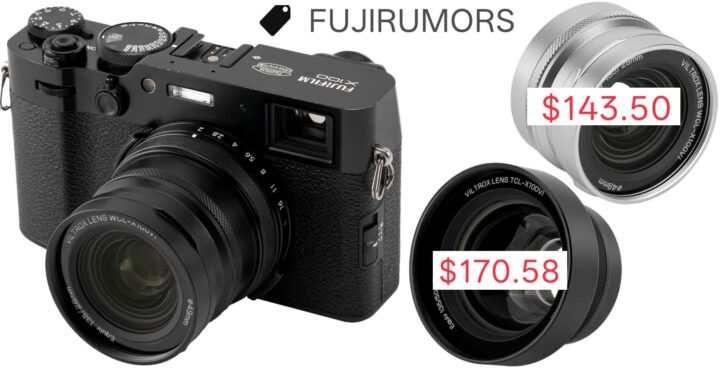
Viltrox has officially released the new WCL-X100VI and TCL-X100VI conversion lenses for Fujifilm X100 cameras.

To celebrate the launch, Viltrox is offering a 5% introductory discount.
And if you enter our exclusive coupon code FUJIRUMORS at checkout at the Viltrox Store, you’ll save an additional 5% on top of that.

Important: The launch discount expires in 5 days. After that, only the 5% FUJIRUMORS coupon will remain available—so if you want the best deal, now’s the time.

The Viltrox conversion lenses won’t be the first third party alternatives to the original Fujifilm WCL-X100 II and TCL-X100 II.

Below you can see all the already available alternatives:

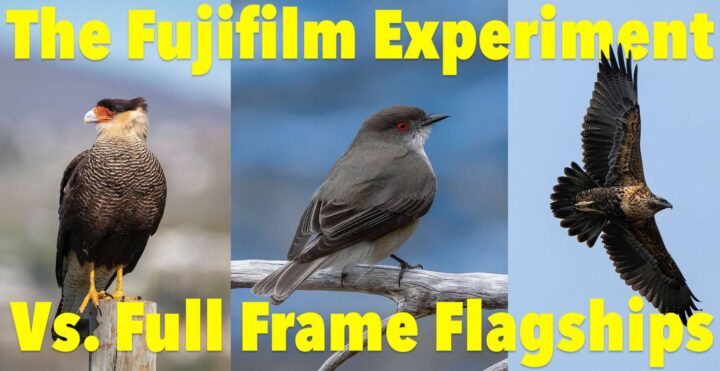
After 20 Years Shooting Full-Frame Flagships, He Took Fujifilm APS-C to Patagonia – And This is His Brutally Honest Review

Mattia Campos is shooting top-tier flagship cameras and lenses from all possible brands for sports and wildlife photography for 20 years now.

But for this trip to Patagonia he decided to try something completely new: the Fujifilm APS-C system.

So he got himself a Fujifilm X-H2S and XF500mmF5.6 and started his journey.

He documented his experience in a lengthy and brutally honest article, in which he shares truths that Full-Frame fanboys might not want to hear, along with fair critiques that Fujifilm should take seriously.

Was it a good experience?

In short: he was blown away by the Fujifilm APS-C system.

The best JPEG files and colors he has ever seen on any system (clearly superior even to Canon), ultra-flexible RAW files that did not make him miss his flagship full frame cameras and all this is a compact and affordable package you can only dream of in the Full Frame world.

In fact, he goes so far to say that the Fujifilm APS-C system could become a serious threat for all the high-end full frame competitors… if only one last thing gets fixed: autofocus!

To be clear: the autofocus is really good, but not yet on par with the top tier models from competitors. And he’ll explain what exactly did not work super-well in his article (and we sum up below for you).

I invite you to read the full article (written in Italian) and see all the images at the Italian website/forum juzaphoto.

The Article in Short

Preparing for Patagonia: Why He Chose Fujifilm

While planning his wildlife-focused trip to Patagonia, he spent months debating which gear would best meet his needs. In the end, he chose a setup he had never used before: the Fujifilm X-H2S paired with the XF500mmF5.6. Coming from years of shooting with flagship bodies and high-end lenses, the X-H2S felt like the natural choice within the Fujifilm ecosystem.

The trip included long and demanding hikes, but carrying the Fujifilm combo was never an issue. Its light weight and compact size—especially compared to full-frame flagship alternatives—made travel far easier.

First Impressions

His experience with Fujifilm was, in a word, fun.
He adapted quickly to the new system, though he did spend time learning menus and fine-tuning settings for different situations.

The X-H2S feels solid, handles beautifully, and offers a superb EVF. The XF500mmF5.6 delivers excellent image quality.

After 20 years photographing wildlife and sports with top-tier gear from multiple brands, he came to a surprising conclusion: for advanced and demanding enthusiasts, a high-quality Fujifilm APS-C system is the best pick in terms of overall balance of performance, weight, size, and price.

Why Fujifilm APS-C Makes Sense

With Fujifilm, you can build a truly capable system for less cost, size, and weight than equivalent full-frame kits. In many real-world situations, the image quality difference is not noticeable. Full-frame often means heavier, bulkier, more expensive gear, without a proportional gain in results.

Recently he has moved more toward shooting JPEGs for practical reasons: less time editing and less storage needed. Fujifilm’s color science is probably best on the market, followed by Olympus/OM System.

Image Quality: His Biggest Surprise

Throughout his Patagonia trip, he was genuinely impressed by the image quality.
X-H2S files are true-to-life, natural, neutral, and free of color casts, with exceptional color and detail. High ISO performance exceeded expectations, dynamic range is excellent, and the files are very flexible in post.

He has used many APS-C cameras from other brands, but none match the X-H2S in build quality, image quality, and lens ecosystem.

Compared to the Canon EOS R7, he found the X-H2S clearly superior in JPEGs, RAW files, high ISO, shadow recovery, lens selection, build quality, and EVF performance.

The XF500mmF5.6 is extremely sharp even wide open, with very pleasant bokeh.

Going Deeper into the Fujifilm System

His excellent experience with the X-H2S convinced him to dive deeper into the Fuji system, so he bought an X-S20 with the XF90mmF2. The X-H2S offers better autofocus thanks to its stacked sensor, but the X-S20 is still a remarkably capable little camera. Its joystick and lack of D-Pad annoyed him, but image quality—including dynamic range and ISO—may actually be slightly better.

Both cameras perform very well in difficult lighting while maintaining impeccable color and high detail.

The Weak Point: Autofocus

The only real downside he found is autofocus.
Switching from near to far subjects (or vice versa) can be slow, costing him a few shots every now and then—especially when photographing unpredictable wildlife. Continuous AF feels a bit rigid and less responsive in low light. Subject and eye detection work, but the menu system is unnecessarily complex.

Overall, the AF is actually good, but not at the same level of the top flagship systems he is used to.

If Fujifilm can overhaul autofocus responsiveness in the Fujifilm X-H2S II, it would spell serious trouble for all the competitors.

Why Fujifilm Could Become the First Choice

Given that Fujifilm APS-C gear costs significantly less, weighs significantly less, and still delivers image fantastic image quality, combined with industry-leading JPEGs, the Fujifilm system has all the potential to become a top choice for both amateurs and professionals alike, if they also catch up in terms of autofocus.

X Cameras

X Lenses

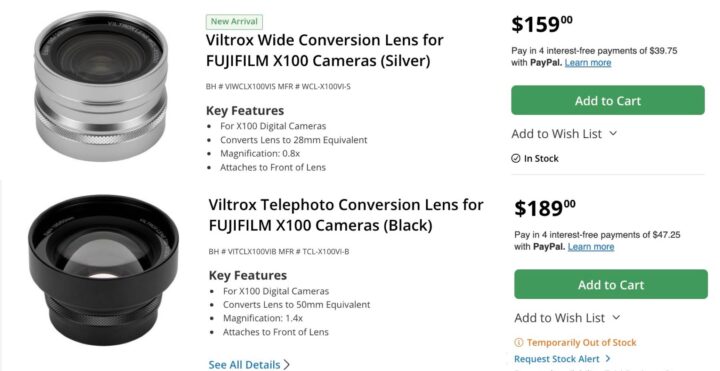
Viltrox WCL-X100VI and TCL-X100VI for Fujifilm X100 Cameras Available at BHphoto

The new Viltrox WCL-X100VI and TCL-X100VI for the X100 system are now available at BHphoto.

The Viltrox conversion lenses won’t be the first third party alternatives to the original Fujifilm WCL-X100 II and TCL-X100 II.

Below you can see all the already available alternatives:

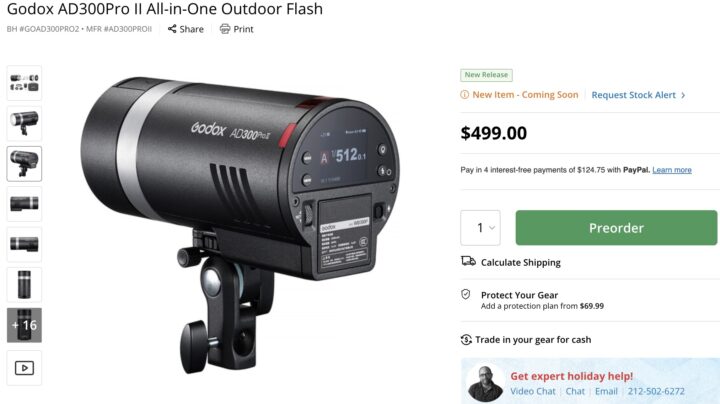
Godox AD300Pro II Launched

The Godox AD300Pro II has just been launched.

Key Features

  • One-Tap Sync with Optional X3 Trigger
  • Compatible with Most TTL Systems
  • 300Ws, 1/512 to 1/1 Power Output
  • Up to 350 Full-Power Flashes
  • Freeze Mode: 1/2310 to 1/24,390 sec
  • 1/8000 sec High-Speed Sync
  • 0.01-1.5 sec Recycling Time
  • 16 Color Groups & Color Screen
  • 12W Bi-Color LED Modeling Lamp
  • Includes Battery, Charging Cable & Bag

Additional Details

** CLICK HERE to Read the Rest of the Article **

The GFX Shockwave: How Fujifilm Is Breaking the Full-Frame Narrative

GFX Rise

As we have seen, the GFX system is steadily growing. So I guess it’s time to dedicate it an image roundup.

But before we share the images (scroll to the bottom to enjoy them), I have a few thoughts to share.

A Peaceful Post

And look, guys. It’s holiday time, Christmas is near and the last thing I want is that we jump on each other and fight in the comments about little things.

That’s why I don’t want to publish anything controversial that could trigger hate in our hearts, divergent opinions in the comments and a good dose of sh*tstorm towards my humble person.

So I thought: what could a super-peaceful topic be? One we all agree upon?

And well, I found it after once again I read a comment that pops up regularly in the comments and on forums: Fujifilm’s marketing is contradicting, as they initially said sensor size does not matter, but then released the GFX.

Now that should be a non-controversial and peace-triggering discussion, right?

So let me share my point of view, which of course is not an opinion, but an irrefutable truth nobody shall dare to question!*
*I am kidding, guys

Full Frame’s Contradiction?

Fujifilm always said it: sensor size is not everything.

In fact, smaller sensors have a series of advantages, from speed, size, price and more, which we have listed here. And also in terms of computational photography the smaller the sensor, the easier you can make its magic work. So a smaller sensor might be even more future proof from this point of view.

But that’s just BS according to Sony, Canon and Nikon, who neglect their APS-C lineup and delivered the opposite message: a bigger sensor is always better.

And look, this narrative was fine…

… until the Fujifilm GFX came along.

Suddenly there was a camera on the market, with a sensor 70% bigger… of fuller… than full frame and in some cases even smaller bodies than some full frame cameras.

At this point the full frame mantra “a bigger sensor is always better” was no longer a proper marketing or forum phrase, as this would implicitly mean that full frame shooters could level up their game and get 70% better “Image quality” (whatever that means) by using the Fujifilm GFX system.

So the new full frame narrative became: sensor size is not everything. Smaller sensors have advantages in terms of speed, size, price and more.

That’s correct, but does it sound familiar?

You got it, that’s exactly what Fujifilm said right from the beginning: sensor size is not everything. Finally also the Full Frame world got this message.

Look, everything is a compromise, a balance, a matter of choices and priorities. And there is no “best” system. Sensor size is just one of the many aspects to take into account when choosing your system.

Fujifilm’s Contradiction?

So we established it by now: many Full Frame supporters contradicted themselves by first saying that a bigger sensor size is always better and then adopting Fujifilm’s point of view that a bigger sensor is actually not always better.

But did Fujifilm contradict itself too?

Because if sensor size is not everything, why even bother launching the GFX system?

Well, I see no contradiction, and here is why.

First off: when launching a second system, Fujifilm did not look at the market as a whole, but at their own offering. And from their point of view, precisely because sensor size is not everything, the difference between APS-C and Full Frame was not enough to justify an additional FF system.

Add to that the plethora of advantages that X-Trans offers (less color noise, less moire, more pleasing film-like grain and more), and going Full Frame made even less sense.

And yes, some trashtalked X-Trans for having some flaws, but we debunked those a long time ago with hardcore facts.

So, for Fujifilm, the combination APS-C and X-Trans was the way to go.

But Fujifilm also realized one thing: there are photographers out there, who can make compromises on many things, but not on image quality – and here is where the Fujifilm GFX system comes in.

If you are anyway willing to compromise on image quality for other benefits (smaller size, more affordable, faster sensor readout, etc), then APS-C is probably the sweetspot (as DPReview, Petapixel and other claimed here).

But if you are not willing to sacrifice on image quality (without breaking your bank account) then Fujifilm GFX is the way to go: it will give you the best image quality possible at a reasonable price.

Yes, you are going to spend more money, you will have bigger lenses, the sensor readout will be slower and what not. But if you can accept those compromises, you’ll be rewarded with the best image quality you can find on the market in a still portable (I talk out of experience) and fairly priced package.

So, there is no contradiction: for Fujifilm it just made sense to offer APS-C for those, who want a balanced system and GFX for those who can’t compromise in image quality. It’s consistent and logical.

I am not here saying this was the right choice. Only time will tell. But it’s a choice I understand from Fujifilm’s point of view.

Enough Talk

And now to the true point of this article: the images!

I went through the work shared at our Fujifilm GFX group and selected some images.

This is just a little taste of what the GFX system can do for you ;).

Esteban Gil – shared here
GFX100 You shouldn’t use non native lenses on the GFX.
My cheap laowa 17mm: Hold my beer
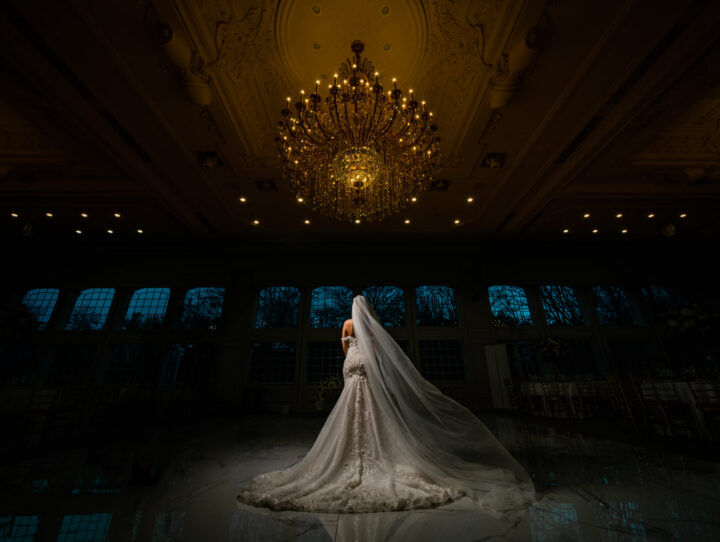
Magbox+AD300

_ _ _

** CLICK HERE to Read the Rest of the Article **