



Understanding the Fujifilm X-Pro4 Release Timeline

🔥 BHphoto Mega Deal Zone 🔥 – Limited Time

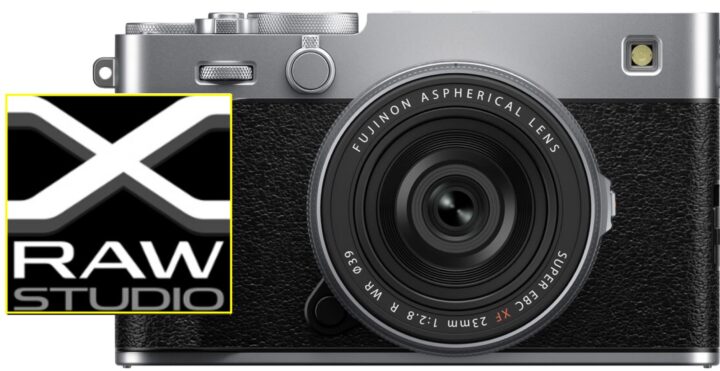
We told you that the Fujifilm X-Pro4 will be coming only sometimes after the Fujifilm X-T6, which will be announced in September 2026.

I don’t have a precise time-frame, but as soon as I know something I will update you here.

But what could be the reason for such a long delay?

Well, Fujifilm certainly is under huge pressure with the X-Pro4.

They said they are aware of the high expectations and they want to make it more than just an upgrade.

It’s also going to be the Fujifilm luxury line, and as such it definitely needs something that sets it apart from every other Fujifilm camera.

Another problem: for many the Fujifilm X-E5 is almost exactly the X-Pro many always wanted: no optical viewfinder, IBIS, premium fee, rangefinder stylel. Basically an X-E/Pro.

Thanks to the X-E5, now the Fujifilm X-Pro4 has to the freedom to experiment and come up with something truly special. But in this freedom there are also lots of choices to be done. And I think it’s these choices that slowed down the release of the Fujifilm X-Pro4.

One choice Fujifilm obviously already did was to wait for the new sensor and processor, which is why we never got a 5th gen X-Pro4.

Then there are open questions on certain design choices.

Should the hidden screen remain (some really love it), or should it go away (as Fujifilm Switzerland seemed to tease)?

And should they maybe also implement some X half features like the multifunctional film-lever?

How can Fujifilm improve the hybrid viewfinder, if it’s still there?

What about implementing the GFX100RF aspect ratio dial or even the super-sleek hidden X-E5 dial, maybe with other functions than on GFX100RF and X-E5?

You know, designing and X-T6, X-H3 or X100VI is pretty straightforward. in terms of camera body, there are not really many relevant choices to make.

But things are different with the X-Pro4. The Fujifilm design team can go much more creative, and I’d argue at this point, with this X-E5 on the market, they also have to. And all these choices, these decisions, need time.

And to be clear: if the X-Pro4 comes shortly after the X-T6, then all these decisions have already been made. But if it takes a bit longer, then Fujifilm might have still some freedom to make certain choices. And in any case, all of this explains why it is taking so long.

So yes, we have to be patient.

But the time Fujifilm is taking shows us that they are thinking it through like never before.

And I believe that the day the X-Pro4 drops, it will truly be something special and it will an iconic camera for many years to come.

Follow FujiRumors on PatreonFacebookInstagramRSS-feedYoutubeFlipboard and Twitter

The Best Fujifilm Communities

Fujifilm X-Pro4 – Rebuilt from the Ground – Wishes and Speculations

The Fujifilm X-Pro4

2 years ago, Luca Petralia made a video in which he expressed his Fujifilm X-Pro4 wishes. Among them, the controversial removal of the hybrid viewfinder.

But for some who wish to get rid of the optical viewfinder, there are others instead who prefer the EVF to get removed in favor a full optical-only viewfinder.

Personally, I think neither the optical nor the electronic viewfinder should be removed.

On the contrary, I hope they’ll both be improved, and early rumors point indeed towards that.

The Wishes Have Changed

** CLICK HERE to Read the Rest of the Article **

Full Frame Veteran Shoots Fujifilm GFX100 II at MotoGP: The $4,000 Fujinon GF Lens That Matched $16,000 Nikon Glass

Mattia Campos has spent more than 20 years working with every kind of ultra-flagship full-frame camera you can think of. Not long ago, we reported how he decided to step outside his comfort zone and take the Fujifilm APS-C system to Patagonia for wildlife photography.

The short version? Fujifilm’s APS-C system completely blew him away. His review turned out to be one of the best—and most brutally honest—camera reviews of 2025. If you haven’t read it yet, it’s absolutely worth your time.

But Campos didn’t stop there.

He also put the Fujifilm GFX100 II to the test in a place where you would least expect a medium-format camera: a MotoGP race.

The full review is in Italian and was published on JuzaPhoto. Below, I’ll summarize the key takeaways, including a direct comparison with the Sony A1 and the Nikon Z8.

One comparison, in particular, really stands out.

Campos compared:

He cropped the GFX files to match the field of view of the Nikon files—fully expecting the Nikon setup to come out on top.

It didn’t.

The results were practically identical.

In other words: with a €4,000 GF lens, he achieved the same level of sharpness as with an $16,000 Nikon super-telephoto.

And that was just one of the advantages he found in high resolution—and in medium format more broadly. He also appreciated several other qualities of medium-format files… and was equally honest about the aspects he liked less.

You can read all about it below.

NOTE: the original article shared months ago contained images. However, Mattia has since then canceled his account on the forum and the images have disappeared. However, his text and findings are still there, which is why I still decided to share it.

** CLICK HERE to Read the Rest of the Article **

Fujifilm X-T6, X-Pro4, X-H3, X100VII with 46 Megapixel Sensor? – Speculation Based on Fujifilm GFX180

We told you that there will be a Fujifilm GFX180. it won’t happen very  soon, but it will come at some point.

And the Fujifilm GFX180 might even tell us more about the future of the Fujifilm APS-C system and the X-Trans 6 sensor.

Why?

Well, Fujifilm usually uses the same sensor for the X system and GFX system, with the only difference that the GFX sensor is about 4 times bigger.

This means:

  • 26MP APS-C sensor (X-S20 & Co) = 102MP on GFX (GFX100S & Co)

Now, if we were to apply the same logic to the rumored Fujifilm GFX180 sensor, then we would get this

  • 180MP on GFX = about 45.8MP on APS-C

This means that I would not be surprised if the Fujifilm X-T6, but also the Fujifilm X-Pro4, the Fujifilm X-T60, the Fujifilm X-E6, Fujifilm X100VI and the Fujifilm X-H3 would come with a 46 megapixel sensor.

This means a slight increase in resolution for APS-C, which is definitely welcome.

Other questions remain open, with the main one being if it will be a DGO or DCG sensor.

Regarding the “more megapixel are bad for low light photography”, make sure this read this debunking article.

Follow FujiRumors on PatreonFacebookInstagramRSS-feedYoutubeFlipboard and Twitter

The Best Fujifilm Communities