miXed zone: “the best camera is…?”, X-reviews and Iridient

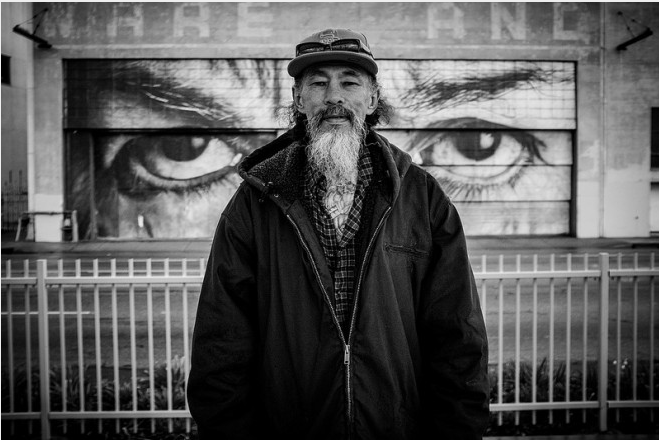
 photo KAI_zpsa5322f29.png

image courtesy: Dave Kai Piper (X-PRO gallery)

the best camera is? Dave Kai Piper has the answer. Read it here! (Dave also updated the X-PRO Gallery here)

X-M1

X-M1 (body only or with 16-50mm)USA: AmazonUS / BHphoto / Adorama / DigitalRev / Pictureline EUROPE: DigitalRev / WexUK / PCHstore

XF 27mm – USA: AmazonUS / BHphoto / Adorama / DigitalRev / Pictureline EUROPE: DigitalRev / WexUK / PCHstore XC 16-50: WexUK / PCHstore

– Techradar hands-on review can be read here: “Its build quality is still high, but it’s a considerably smaller and more portable camera. It also has a mode dial instead of traditional controls, which may be more attractive to relative newcomers to photography as well as those looking for an alternative to a DSLR. However, those who want to use the camera with a lens with an aperture ring can do so.”

X100S

[shopcountry 12883]

– Steve’s digicame X100S review here: “The Fujifilm X100S is a great update of the X100 they released in 2011. With increased performance and image quality, a fantastic camera has been greatly improved. This is one of the leading cameras when it comes to Fuji’s innovation and quality.  It’s still a rangefinder style camera with a fixed 35mm equivalent lens, designed specifically for enthusiasts who want a rangefinder-type model. With a MSRP of US $1,299.99, the limited versatility and huge price tag take this camera out the running for most people, but if a rangefinder model with excellent image quality is what you are after, this is a must see.”

– X100S video review at shuttertastic here… how good can it capture some crazy skaters? He states that DR and RAW can compete with high end DSLRs.

expertreviews posted his X100s test here: “It might seem like a predictable conclusion that this is the best compact camera we’ve ever reviewed. After all, it’s also the most expensive. For once, though, the law of diminishing returns doesn’t apply – it’s vastly better than anything else we’ve seen. While the beautiful design and retro exposure controls make it easy to love, its ingenious viewfinder and stunning low-light image quality mean it has the goods to back it up.”

image courtesy: expertreviews (ISO 12800)
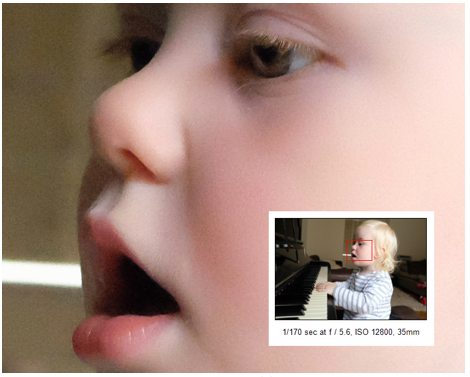
 photo exr_zps044f9b0a.png

 X20

[shopcountry 12884]

X20 vs [shoplink 13127]Sony RX100[/shoplink] at pixelogist here: “When testing it [X20], I wanted to like it, I wanted to keep this camera, this camera that handles that much better than the Sony RX100, that looked better, and all that – and wanting it so much, I didn’t completely realize its faults: the slow AF at night, the poor high ISO performance when compared to the Sony, and so on. Now that I have, I’ve ‘re-decided’ on the Sony RX100, and that’s what I’m keeping.”

ZEISS
Zeiss Touit 12mm [shopcountry 13645] Zeiss Touit 32mm [shopcountry 13646]

– The Phoblographer used the Zeiss lenses at a wedding (on a beach) with the Fuji X-PRO1. (click here): “Overall, these lenses performed great and even though the 32mm f1.8 suffered from a jamming issue, it wasn’t a big loss to my shooting capabilities. But it’s surely something to consider as the last thing you need to be worrying about at a wedding is your gear.”

FUJINON
Fuji XF 55-200mm [shopcountry 12892] Fuji XF14mm [shopcountry 12888]

8.8 out of 10. That’s the rating of the XF 55-200 over at photoreview here: “On the X-E1 body the review lens provided fast, quiet and smooth autofocusing. Manual focusing was also smooth and it was relatively easy to focus accurately in manual mode with either the viewfinder or monitor. Autofocusing speed was similar to the 18-55mm lens’s and reasonably fast in bright conditions and with contrasty subjects. Some hunting occurred in very low light levels and, occasionally, with subjects where the contrast range was relatively small. […] Lateral chromatic aberration was negligible throughout the aperture and focal length range […] Distortion was low enough to be negligible throughout the zoom range. Vignetting was also negligible. No in-camera corrections for either aberration are provided by the camera but, it seems, none are necessary.

– What a nice place to think about the 14mm lensTrinidad & Tobago! See Karim’s shots and read his thoughts here. From the conclusions: “This is a great lens, although I’m still not sure that I wouldn’t have been better off with the 18mm. I’m all about the image quality, and it seems the 14mm might lag slightly behind in that regard. But the extra width and other features make up for the slight difference in sharpness between the two lenses. The images shot with the 14mm look great and they’re virtually free of distortion. Manual focusing is very smooth, and the sliding ring that reveals a distance and depth-of-field indicator is a very useful feature.

X-PRO1

[shopcountry 12882]

– Yes, he did it! roughly365 shot a whole wedding with the X-PRO1. Read his experience here: “So in conclusion…. The Fuji X-Pro1 is an amazing camera… When I next do a wedding it will be in my hand for a very large portion of the day, such a great tool for this kind of job. Its size really helps you be less intrusive and capture some subtle moments. I would always have my DSLR over my shoulder too as there are times you really need one. But this is a real James Bond Walther PPK  of a camera, I love it.”

Iridient

There is more (positiv) feedback about Iridient at this German website here  and at the Spanish site fotoactualidad (translation).

image courtesy: fotoactualidad (1-Iridient / 2-silkypix / 3-ACR)
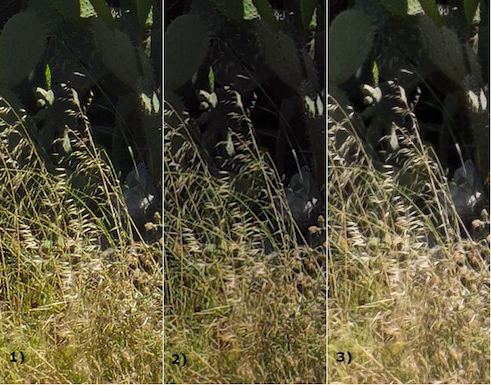
 photo iri_zps95964408.png

XF1

[shopcountry 12885]

– The XF1 is more than just beautiful. At least according to the imaging-resource review: “While the XF1 is not meant for everybody — there are better, more straightforward “vanilla” compacts that are easier to use and take more consistently good shots — it’s an undoubtedly nifty and advanced tool for photo enthusiasts (and not just the Fuji fanboys!) who demand something special from their cameras. The XF1 should also score big with casual shooters who not only want to attract oohs and ahhs when they carry it around town, but also want a camera that, on auto pilot, will take well-exposed shots with high dynamic range. Add up the Fuji XF1’s sexy appearance, fast and fun operation, immense customizablity, dynamic image quality and special shooting modes, and you have a solid, if unorthodox, enthusiast-level compact camera. It’s one that definitively earns a Dave’s Pick.

– “The Fujifilm XF1 is one of the nicest-looking point-and-shoots available and it performs well, too. But its photos and features might not please some enthusiasts.” This is the bottom line of CNet. Read the whole review (with video) here.

Zen + Yin and Yang… or: the art of street photography + the good and the bad of the X-E1

 photo zen_zpsf448d130.png

image courtesy: Rinzi Ruiz (via erickimphotography)

Zen

These are some original tips to become a better street photographer, ispired by the book of Herrigel [shoplink 13217]”Zen in the Art of Archery“[/shoplink] (it’s well worth a read!). Eric adapted it to the photography, and wrote: “zen in the art of street photography“. Enjoy reading it at erickimphotography:

1. Lose yourself in the moment:” One of the philosophies of Zen is that you should lose self-consciousness of yourself, and especially of your own ego. You don’t think of yourself as being great and the center of the world. Rather, you see yourself as something quite insignificant and just like a grain of sand in a desert. When I am out shooting on the streets, the feeling of getting lost in the “flow” makes me feel much more comfortable shooting in the streets (and is often when I take my best photos). The second I become self-conscious, I find myself drawing too much attention to myself and my subjects can sense my hesitation and feel less comfortable.” 2. Ignore recognition/fame / 3. Don’t photograph others, photograph yourself “Embrace your subjectivity in photography, and try to shoot faithfully. Don’t photograph in a way which you feel doesn’t sit your personality. If you find yourself a shy and introspective person, you don’t need to shoot a stranger super-close with a flash. You might want to take a more detached approach, and not intrude on somebody”./ 4. Relax / 5. Focus on the journey, not the destination

Yin and Yang

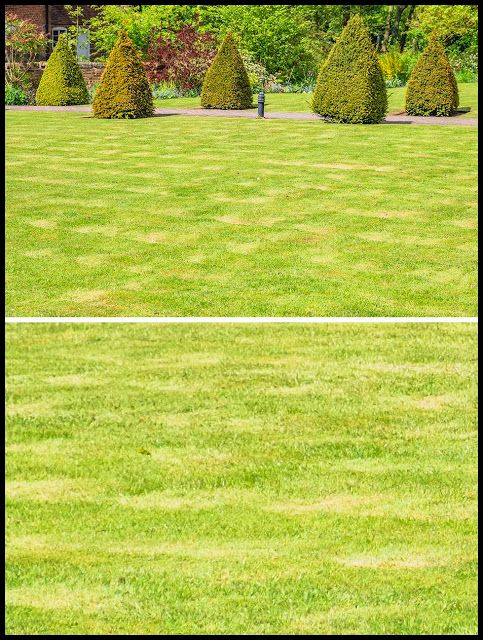
the good and the bad, or the Yin and Yang, of the X-E1 according to soundimageplus (click here). Definitly a great camera, but battery life is “terrible“…. and what about the X-Trans sensor?

“I’m still not entirely convinved that the ‘foliage smearing‘ effect is entirely cured, even using Aperture. Sure, its a lot better than it was, but there are still problems. […] the sensor seems to have real problems with greens and yellows and doesn’t seem to be able to ‘sort them out’ properly. […]

So Yin and Yang. The technology that gives us spectacular ISO performance creates a somewhat ‘confused’ rendition of certain kinds of detail in the natural world.

image courtesy: soundimageplus

 photo _DSF8115_zpsb60c6d24.jpg

Jackar Snapshooter 34mm f/1.8: Fuji X-mount lens for $175

 photo cheap_zpsd2f78e0f.jpg

The Jackar Snapshooter 34mm f/1.8 is an old-school look cheap lens made in China that can now be pre-ordered for the Fuji X-mount at Adorama for $175 here. ephotozine tested it on the [shoplink 13887]Olympus OM-D E-M5[/shoplink]. Read the whole review here. The conclusions:

“This is an interesting take on the fast prime lens for Micro Four Thirds and NEX cameras, and the solid metal construction of the lens is re-assuring, although with the lens’ relatively low price, it’s clear that the optical quality of the lens isn’t likely to be the strongest feature. However, saying that, this lens performs better than other lenses we have tested (cough Holga, Toy-Lens, Pinwide cough), and with a sharp centre, bright aperture, and soft edges, this lens may be ideal for anyone looking for a good compact lens for portrait photography, low light, or creative control over depth of field.

If you want a manual, compact lens, then the reasonably price and high build quality would make this a good choice, however, for landscape shots and situations where image quality is more important, it may not be the ideal lens, but for low light, wide-open shooting, and portrait shots, it could be ideal.”

Image Quality: “why DPReview may be sometimes wrong” + “I was a skeptic but now I’m a believer” (Iridient vs Adobe)

 photo asd_zps548e1e27.png

image courtesy: thevisualexperience

The good news is, Fuji X-photographers now have various options to process their X-Trans files and get decent results out of it. The most popular options are Lightroom, Silkypix, Capture One and Aperture. But there are other software programs like Raw Photo Processor (based on DCRAW), AccuRaw… (check out this X-Pert Corner RAW-comparison post).

But in the last weeks I told you several times of Iridient Developer (Mac 0nly). This is an option which you should seriously consider to add to your workflow (try the demo version). Does the details extracted from the RAW by IRIDIENT really blow out ACR? Could this be the software that finally unlocked the full potential of the X-Trans sensor?

Now, I’d like to share with you the following articles. The first one at thevisualexperience analizes the way dpreview tests the image quality of the different cameras, while in the second post, “I’m a beliver”,  Activatedfx talks of his conversion from LR4.4 to Iridient 2.1.1!

1) Why DPReview may be sometimes wrong

This is how dpreview tests the image quality of cameras (source thevisualexperience):  a) Load RAW file into Adobe Camera RAW (Auto mode disabled) b) Set Sharpness to zero (all other settings default) c) Open file to Photoshop d) Apply a Unsharp mask: 100%, Radius 0.6, Threshold 0 d) Save as a TIFF (for cropping) and as a JPEG quality 11 for download

DPReview paved the way for “scientific” comparison of camera performances, guiding passionate and professionals in understanding “what is worth to buy” and what is not. […] So ACR is the “meter” used to compare cameras for what concerns RAW. You can jump to the “Image Quality” of each review and use the tools to compare RAW performances.

But now that Iridient delivers such great results with the X-Trans files, thevisualexperience suggest to DPreview:

[…] please start taking into account different RAW processors or, at least, make some claim that the RAW results people are inspecting may be not representative of the REAL POTENTIAL a camera may have (since the meter you’re using is, somehow, not the best).”

2) I was a skeptic but now I’m a believer

And here there is another photographer that was blown away by the Iridient results and posted his comparison… at the great dpreview forum (check it here)!

“The Iridient image has more DR, richer colors, more detail in the sky, and a noticeably SHARPER image with no halos or artifacts. To my eye, it doesn’t looksharpened” at all. In particular, look at the detail in the background of the road sign at 100%. The pattern is much more distinct in the Iridient image. And it’s not because of more contrast.”

Do you consider to swich or add Iridient to your workflow and you do not own a Mac? Apple just released the new MacBooks with an incredible battery life! [shoplink 14128]Check them here at your Amazon[/shoplink].

all the best
Patrick

Should Fuji find a firmware solution to allow us to control ISO values with front/rear dial?

View Results

Loading ... Loading ...

Fujifilm X-M1 first impressions at sulantoblog


first impressions

Matti Sulanto just posted his first impressions of the X-M1 (pre-production), 16-50mm and 27mm at his website here. Among the other he says that:

“[X-M1] The Fuji X-M1 is very small and probably one of the smallest APS-C size system cameras. […] I saw the first pictures of the X-M1 some weeks ago and I was not impressed by the rear control dial. But, as they say, never judge a book by its cover. Now that I have used the X-M1 a bit, I’m rather happy with the control lay out. […] Shooting with the new Fuji X-M1 is a good experience. The autofocus is fast with the new 16 – 50 mm and the 55 – 200 mm zooms. Not [shoplink 13800]E-P5[/shoplink] fast, but fast. […] The competition is tough in the middle class of compact system cameras, but I think the new Fuji X-M1 stands a fair chance. […]

[XC 16-50] Even in its pre-production form this lens looks as good as the rest of the Fujinons. […] The zoom ring rotates smoothly and the lens extends to almost double length when zoomed from wide to tele. […] The optical performance looks promising, but I’ll wait until I have a real production lens, until I draw my final conclusion. The autofocus is fast and the OIS seems effective. I managed to get sharp pictures at 1/2 s. shutter speed at 50 mm setting, when I concentrated a bit.

[XF 27mm] It is quite small and light, but seems well constructed. […] The autofocus is fast, but makes more pronounced back and forth movement and little more noise compared to the 16 – 50.”