There are currently massive deals running on Fujifilm GFX gear. So I thought let’s share a dedicated GFX roundup, just in case you are interested in the system and want to see what others think about it.
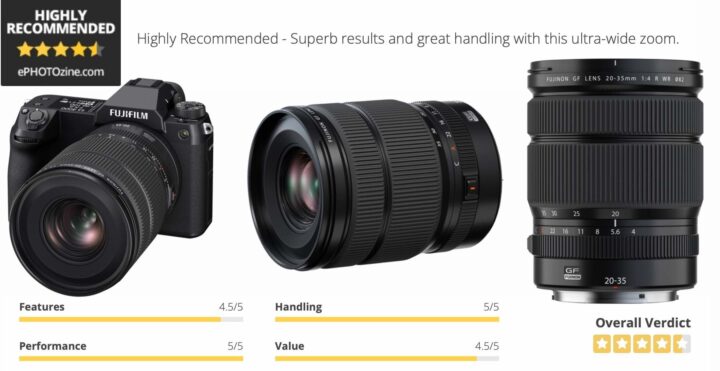
Lots of reviews will also cover the Fujinon GF20-35mmF4 lens, which is not included in the rebates, but is a true gem and I am afraid will pretty much reduce sales for the Fujinon GF 23mm f/4 to a minimum, as it is more flexible and smaller, while still being optically fantastic.
Also, I warmly recommend you to join our Fujifilm GFX group, which is full of talented and passionate GFX shooters sharing their work and thoughts there.
We recently reported about a comparison made between Canon R5 and Fujifilm X-H2, and we saw that the new DxO PureRAW 3 brings sensible benefits to the sharpness of the X-Trans files, whereas the same software does not really boost sharpness on the Canon R5 with Bayer sensor.
That’s why the reviewer ended up highly recommending to add PureRAW 3 to your Lightroom editing workflow in order to get best results.
Well, if you didn’t test it, then DPReview did that for you.
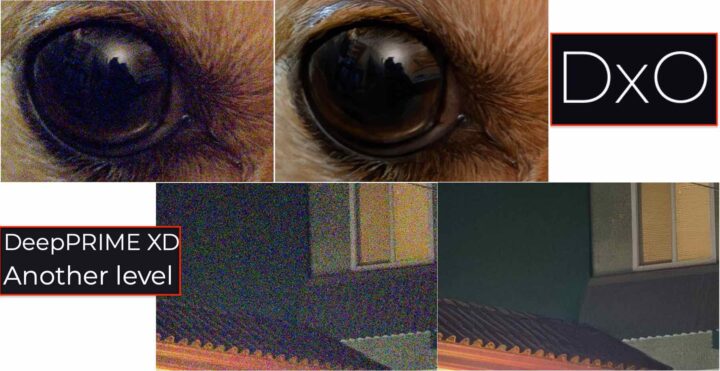
They call the new DeepPRIME XD support a win for Fujifilm X-series shooters and recommend it to make it your default option for high-ISO shots.
From my testing, the arrival of DeepPRIME XD for X-Trans looks to be a win for Fujifilm X-series shooters, just as it is for those on other platforms. Although it isn’t always going to be your best bet, it performs better than the alternatives frequently enough that if you’ve the time required for its processing, it’s worth making your default option for high-ISO shots.
It’s also worth noting that even when it struggles with things like text, you usually have to be looking at the image very closely to spot the defects. Viewed from a more typical distance, a DeepPRIME XD shot is going to create the impression of more detail and crispness, even if it’s to some extent an artificial invention. When not pixel peeping, that can make the overall image feel better even when a more rigorous examination might tell a different story.
You have to bear your subjects, the viewer and how they’ll be looking at your images in mind when deciding which algorithm to use.
The point here is that you have to bear your subjects, the viewer and how they’ll be looking at your images in mind when deciding which algorithm to use. And we’ll restate that we’ve only shown results at default settings; you can always dial back the strength of an algorithm to improve the results for any given shot.
Overall, I’ve found DeepPRIME XD to be a very useful tool and I’m thrilled that it’s now available for X-Trans shooters too!
So definitely give DxO PureRAW 3 and DeepPRIME XD a look especially if you are on a Lightroom workflow. And make sure to check out the full article and see the comparison images at DPReview here.
But he went an extra step. He did not simply load the files into Lightroom to process the RAW files (with Lightroom standard settings) and then print the images.
Nope, he wanted to “help” Lightroom to deal with X-Trans files, and hence used DxO Pure RAW to transform the files into a DNG and only then processed them in Lightroom.
Unfair?
Well, he did the same with Canon files, but DxO did not bring any benefits in terms of sharpness to the Canon files, as opposed to Fujifilm X-Trans files, which definitely saw an improvement if passed through the DxO engine.
The result: the Fujifilm X-H2 and the Canon R5 both delivered very comparable results. Sometimes in certain areas he preferred the details on the X-H2, sometimes on the R5. But overall, both delivered absolutely excellent results.
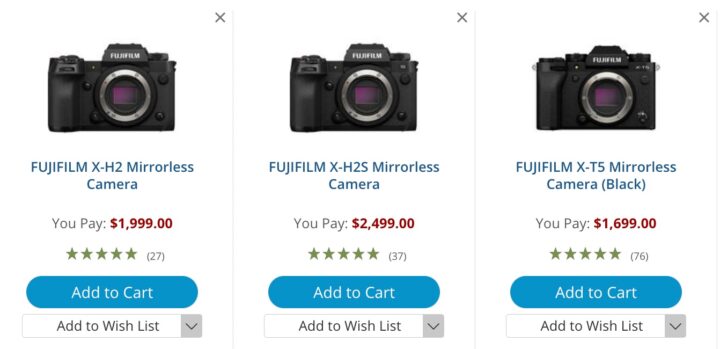
Not bad for the Fujifilm combo, which costs about half as much as the Canon combo.
Look, RAW files are intended to be processed. And it’s up to everyone to decide how to do that.
But if you own X-Trans cameras and use Lightroom, then using DxO as a plug-in is definitely a recommended step to take into your post processing workflow.
Not mentioned by Ian in the video is the new DxO “DeepPRIME XD” support for X-Trans files, which is clearly superior to the more basic “DeepPRIME”. Now it really handles noise especially in dark areas much better.