Sure, there are always those, who might not be familiar with such an extreme lens, so they go out and shoot at f/1.0 at a bright sunny day in super high contrast scenes and then complaint because it shows some fringing or because you can’t work without an ND-filter.
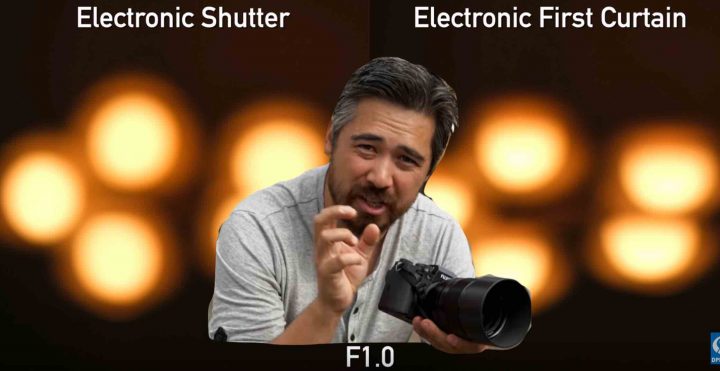
Or when reviewers say the bokeh is not good, and then it turns out they used electronic first curtain shutter, which distorts the look of the bokeh (as you can see from the image above). You should always use the standard electronic shutter (or mechanical shutter) if your goal is to get nice bokeh.
So, some of the “flaws” reviewers notice, are actually not issues with the lens, but faults of those, who use a radical fast lens with the wrong settings in the wrong conditions.
It’s clear: if you go for such an extreme lens, you better know about photography and how to handle specialty lenses like this one.
One of those guys, who know how to master such a lens, are Chris and Jordan from DPRTV, who now have published their hands on review of the Fujinon XF50mmF1.0 R WR.
You can see the video and read a summary down below.
A few hours ago I have been contacted by a source, who uses a nickname (thanks!!), who confirmed some of our previous Fujifilm X-S10 rumors, and added a few more details:
To the source: if you want, you can also contact me at fujirumor@gmail.com, so we can have a more direct talk, and it would also give me the opportunity to ask you some questions. But if you don’t want, that’s fine too of course. It’s already great that you gave yourself a nickname :).
So guys, I think you noticed that something is happening in the rumor world. If you would like to stay on top of it, make sure to follow us on Facebook, Twitter and RSS-feed.
As you might know, in 2020 I added new gear to my Fujifilm X collection: the Fujifilm X-T4 and the XF56mmF1.2.
The Fujifilm X-T4 turned out to be a great investment already just for the COVID-19 online teaching I had to do.
I am not he biggest fan of the selfie screen (for the reasons I elaborated here), and for my needs the 3-way tilt screen is clearly superior, but other than that it’s such a powerful machine, that sometimes I find myself grabbing it over my X-E3, just because of sheer performance-boost it gives me.
As for the XF56mmF1.2, it was supposed to get heavy use at my friends’ wedding, but due to COVID-19, it has been postponed to next year. And since overall we try to be careful and avoid crowded events and gatherings of people, where the XF56mmF1.2 would shine to take some candid portraits, I used it less than I would have wanted. But I use it, even if just for taking pictures of my old dog in a lonely forest, and I love its output. Although, I must admit, the XF50mmF1.0 is my new forbidden dream already.
Damn, life with GAS is complicated :).
Anyway, with new gear joining my X arsenal, other gear had to go.
The reason is simple: since I own my travel go-to lens, the XF18-135mmF3.5-5.6, the 18-55 and 55-200 didn’t get as much use anymore. And yes, the 18-55 and 55-200 might still be optically a bit superior to my 18-135, but my XF18-135 sample is also very good, giving me a super-zoom range that is more than enough for my needs, basically replacing them both, the 18-55 and 55-200.
And then there is my X-T1.
I put it up for sale for €290, but that’s hard to sell. It’s an X-T1 without mushy buttons, with super-sticky rubber, no light-leak… a perfect X-T1. But while the lenses sold like hot cakes within 24 hours, the X-T1 is still there for sale.
But more gear will be put on sale I guess. Why? Down below the list of gear I own, and what will probably be sold next… and what I will keep.
X-T4 (keep)
X-E3 (keep)
X-T1 (currently for sale)
XF23mmF1.4 (keep)
XF27mmF2.8 (I will probably sell it before the new XF27mmF2.8 MK II is announced, and get the new one, in the hope it has an aperture ring)
XF35mmF1.4 (keep forever)
XF56mmF1.2 (must resist to XF50mmF1.0 siren songs)
I am 100% sure that the XF10-24mmF4 MK II and the XF27mmF2.8 MK II are coming. After the announcement of those lenses, Fujifilm will probably drop prices on the MK I versions, just as they significantly dropped the price on the XF56mmF1.2 right after the XF50mmF1.0 announcement.
Hence, if you are considering to get the MK II version, you might be better off selling the MK I sooner rather than later.
Also, I am in the market for at least one more lens. And I will ask you a clear and specific recommendation. But not now. Time will come pretty soon, when you’ll be able to guide me through my buying decision, just as you did with the X-T4 and XF56mmF1.2.
Until then, take care, stay safe, and have fun with whatever gear you use.
he prefers to be very light during his wedding shoots using very small lenses (he uses the Fujicron f/2 lenses a lot), and the XF50mmF1.0 is a bit too heavy
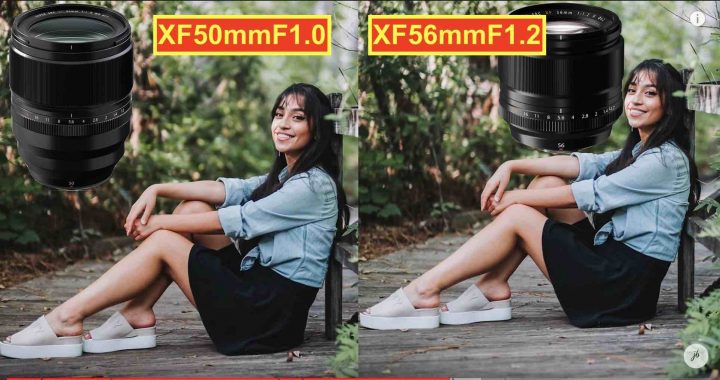
he prefers the 50mm focal length over the 56mm
XF50mmF1.0 has more contrast and is way sharper than the 56mm
Especially considering the current huge deal on XF56mmF1.2 lenses, the 56mmF1.2 is great value for money (a lens I own and love). But from all I could see so far, if you do not mind the extra weight and size, the Fujinon XF50mmF1.0 is the way to go.
Fujifilm really put magic into that lens, a magic best described by Jonas Rask here, when he says:
My all time favorite lens from Fujifilm is the XF35mm f/1.4R – In my eyes it’s the perfect lens. There have been many wordings about that lens, and one thing that keeps on popping up in discussions is that it has a certain something that no-one seem to able to define. It always end up being labeled as “magic” which is silly.
The reason for its look is found in the optical design, a design that Fujinon decided to continue into the XF50mm f/1R WR. And that makes the images coming from this lens extremely appealing to those who like the look of the XF35mm f/1.4.
The images coming from XF50mm f/1 R WR has those exact same undefinable traits that makes me love my XF35mm f/1.4 so much. The sharpness that is sharp, yet not overly sharp. A flattering kind of sharpness that seems more rounded, organic and less digital/clinical. A bokeh rendering that is soft, delicious and very calming to the eye, and a color reproduction that gives a very lovely depth to especially warm color tones.
In other words, the XF50mm F/1 R WR is the portrait lens version of the XF35mm f/1.4 R!
When we first published that Fujifilm would launch a new mid-range camera called Fujifilm X-S10, many of you thought this could be the successor to the forgotten Fujifilm X-S1.
But it’s not!
The Fujifilm X-S10 will be an APS-C mirrorless interchangeable lens camera.
And most interesting, the Fujifilm X-S10 will be Fujifilm’s first camera in that mid-range segment to feature IBIS, a privilege until now reserved only to the high-end Fujifilm X-T4 and Fujifilm X-H1.
I hope this dissipates some of the confusion I was perceiving about it. :)
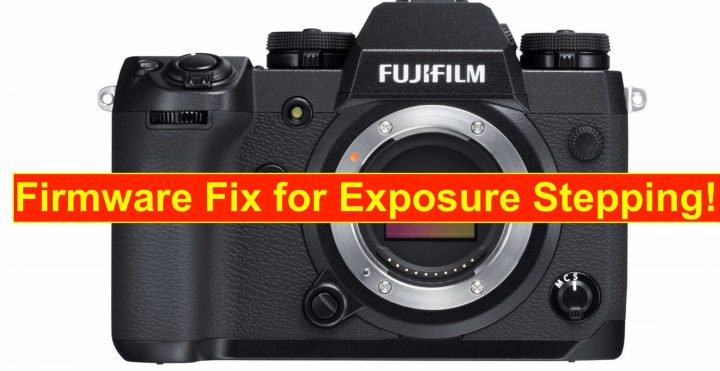
Unhappy of the usual “fix of minor bugs” formula, I sacrificed a few hours of my relaxing holiday, and dedicated myself to find out, what had been fixed. Well, I noticed that Fujifilm secretly and quietly fixed the exposure stepping bug in video, and I immediacy told you about it in this article.
Now also 11 other X series cameras received a firmware update, but since I own “only” the X-T1, X-E3 and X-T4 I can’t really check what has been fixed on all cameras.
But luckily I am just a small part of the big FR community, and fellow FR-reader Unnamed for a reason contacted me, telling me that the exposure stepping seems to be fixed now also on his Fujifilm X-H1.
No more exposure stepping in either Auto ISO or Aperture priority. When setting the aperture to Auto, stepping still occurs in 1/3rd stops (which is also still the case with the X-T4).
On my personal X-E3, exposure stepping seems to be still present after the firmware update.
In addition to that, Unnamed for a reason says:
The wireless communication is much stronger and the camera can be paired at longer distances – Worked flawlessly standing 1-1.5 meters (3.2-4.9 feet) away from the camera.
There are new items in the flash menu. “MASTER SETTING” “CH SETTING”. I am certain these are meant to work in conjunction with the new Nissin rebranded Fujifilm EF-W1 commander unit and Fujifilm EF-60 flash. I attached a Godox XPRO-F and a TT685F unit to the camera, to see if they are compatible with the new functions, but as of now, these slots remain greyed out.
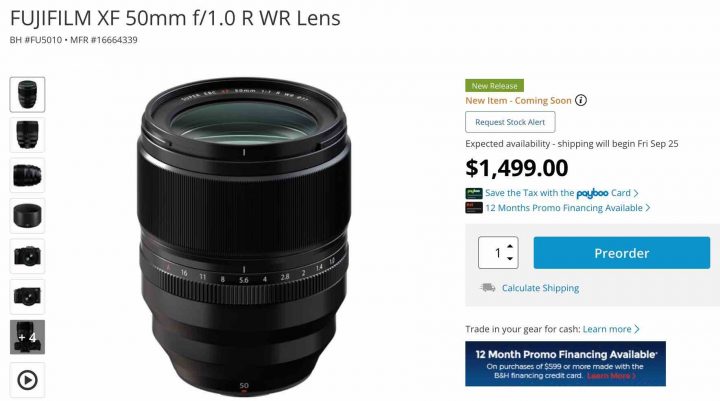
The Fujinon XF50mmF1.0 has reached stores all over the world, so probably Fujifilm will be able to start shipping within September 25, despite the unexpected high demand. Remains to see how large the first batch will be. I have the feeling not enough to meet initial demand.
Fujifilm is also preparing your camera, and has just released XF50mmF1.0 support firmware updates for a total of 11 X series cameras.
Hence, for us it’s time to publish a little Fujinon XF50mmf/1.0 roundup.