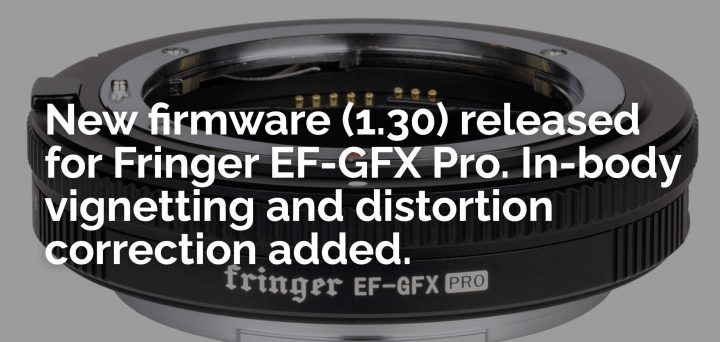
In additional to ordinary updates like being compatible with more lenses, a new function is added, i.e., in-body vignetting and distortion correction support. The adapter firmware 1.30 has embedded with the correction profile for the following lenses.
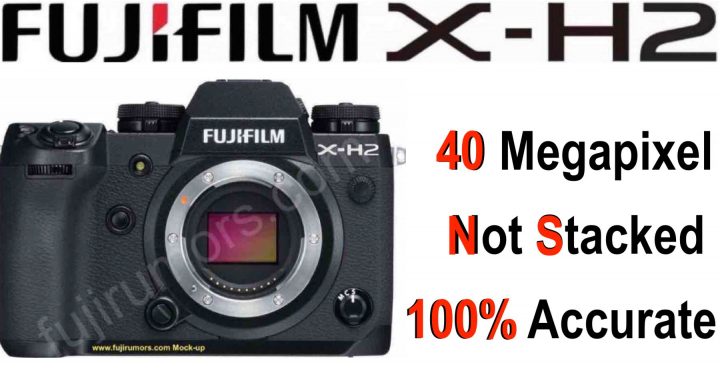
Ok, I have just shared the rumor about the high resolution 40 Megapixel Fujifilm X-H2 not having a stacked sensor.
There is a good amount of disbelief about this rumor, as most (but not FR) gave it for granted that also the high resolution Fujifilm X-H2 would have a stacked sensor.
Now, you know I don’t like to make any reliability ranking when I share a rumor. But given the situation, I thought I make an exception today.
So let me put this way: it is my final, confirmed and definitive answer that the Fujifilm X-H2 will have a 40MP non stacked sensor. I am 100% sure about this and there is no margin of error.
This means that if you love the X-H line and if you look for stacked sensor camera, waiting for the X-H2 is time wasted.
I don’t buy into the narrative that wants you to believe you can make professional work only with full frame gear.
And it’s not just a “feeling” of mine. It’s a hard core fact proven by the irrefutable reality that you can win the Pulitzer prize or the World Press Photo Award with images taken by Fujifilm APS-C cameras.
And I also don’t buy that “sensor size is everything” narrative.
Look, I’ve shot it all: from my loved Micro Four Thirds to APS-C and Medium Format, and yes, even quite some Sony Full Frame as I have easy access to that system thanks to the SonyAlphaRumors guy living not far away from my home.
So I can confidently say: every system has its Pros and Cons and every system, from M43 to MF, can be used for professional use, of course with some cameras being better suited for certain uses than others.
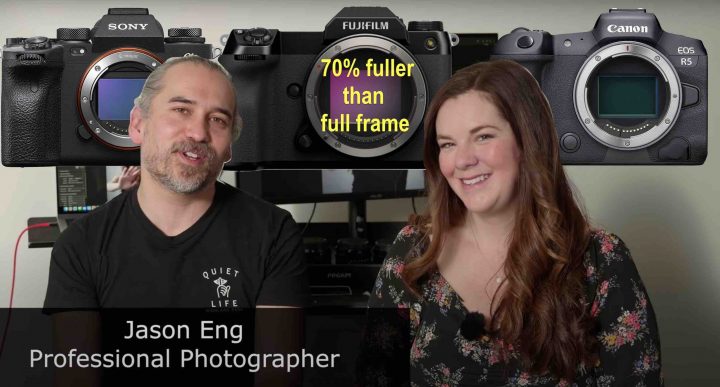
So if somebody tells you that you absolutely need a system with a 70% larger sensor than full frame (the GFX system) to really stand out with the quality of your images, then you better don’t trust that person.
And yet, as we said, every system has its Pros and Cons, and the advantage of the GFX system is undeniably that it offers the best image quality you can get for a more than reasonable price.
Then add to this that the Fujifilm GFX100S and GFX50SII have the size of the Canon R5, are even smaller than the Panasonic S1 cameras and cheaper than full frame cameras like the Sony A1, and you start to get a combination of advantages that might make the Fujifilm GFX perfect for your needs.
And it sounds like the combination of advantages the GFX system offers was perfect for Jason Eng, who, in a talk with Evelyn from TCSTV explains his move to the GFX system.
Here is a quick summary:
Jason’s assistant Aiden was looking to buy into a new system. He looked at Sony, Nikon and Canon and almost pulled the trigger on the Canon
Jason suggested him to try the GFX50SII which costs about the same what Aiden was about to spend for the Canon
Aiden put his hands on the GFX50S and it had “these magical files“
then they also shot the GFX100 side by side with Sony A1 and Canon R5
even by just comparing the images on the laptop sized screen, they noticed the detail in shadows and the way that the camera handled gradation from highlight to shadow was just… “I could not unsee it, it tortured me until I inevitably bought the system“
he bought the GFX100 with a classic pro body with integrated grip and fully usable autofocus
he often shoots vertical, so having the integrated grip is important
he was and still is a Sony shooter, enjoying a smaller and lighter body
then Fujifilm offered the GFX100S with its smaller and lighter body and it reached a larger target audience than what the GFX100 could do
both options, GFX100 and GFX100S, are great
he often shoots tethered and loves that the film simulation he uses goes right into Capture One
as a long time Sony user for 10 years, color was always hard. The standard was Canon
when Fuji released their APS-C mirrorless cameras he loved the colors, but he could not commit to a smaller sensor than FF
but now they have exceeded his expectations and gone larger than full frame
skin tones are great, reds are beautiful, rich and deep
he uses also legacy glass adapted to the GFX system
Fujifilm offering GFX cameras from $4,000 to $6,000 is a game changer for medium format
color and shadow tonality range, you can’t unsee it once you see it side by side
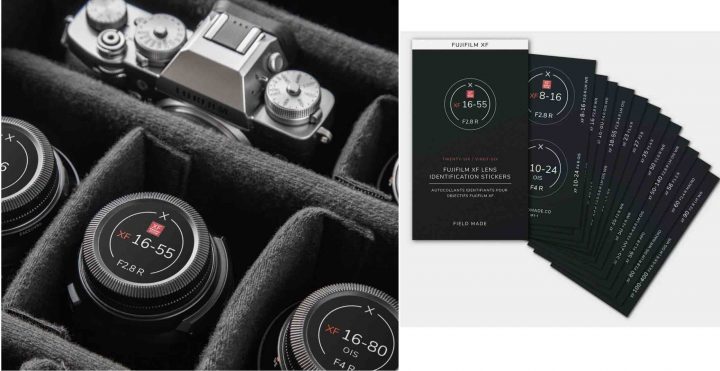
The NITECORE BlowerBaby™ and Sensor Cleaning Kit have been recognized as winners of the 2022 Red Dot Award. To celebrate, Nitecore decide to offer 100 winner products for free to review. You can read all the terms and conditions at the Nitecore page here.
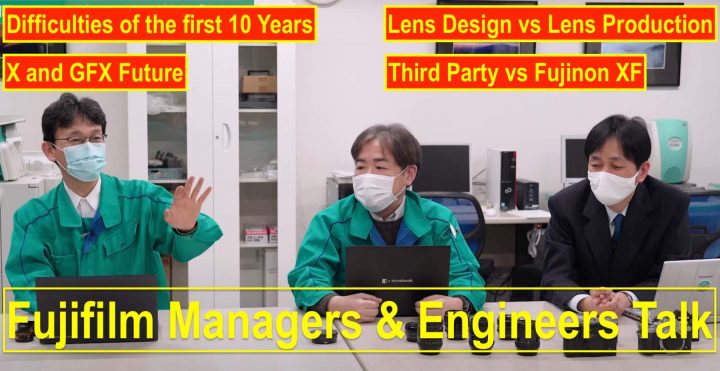
A couple of days ago, Fujifilm managers and engineers have published an almost 20 minutes interview in Japanese.
The whole talk is in Japanese and a real pain to watch using the automatic youtube translator tool.
A pain FujiRumors readers should not go through, so I did what nobody else did: I rolled up my sleeves and put 1.5 hours of my time into making sense of the talk and summing it up for you guys with the greatest care and highest accuracy.
Contrary to what we were used so far, this time they also included non Fujifilm X Photographers to the talk, meaning photographers that are not part of the official X photographers program, but who simply started using X or GFX gear, even though they have no relationship with Fujifilm Corporation.
The first not official X/GFX photographer to be part of the Fujifilm Nordic Webinar series is called Soren Solkaer.
Soren Solkaer went digital since 2002
he instantly started shooting with Full Frame digital (but in his analog times he shot medium format)
about 1 year ago, his prost production guy told him “Sir, we have to talk, there is a new camera in town“
Soren was very skeptical. He didn’t want to change his camera as he was so used to his full frame gear
his post production partner told him there are files now, that are way better than his full frame files
in some of his exhibitions he prints 2×3 meters big, and squeezing that our of full frame can be done, but having a bigger file is a huge advantage
his post production partner told him the files of GFX are bigger and the quality is just amazing
despite being very reluctant, he tried out the GFX system and he saw that his post production partner was right
he did not start with the 50MP GFX but he started right with the 100MP GFX100S
on top of the resolution, there were many other things that hugely impress him of the Fujifilm GFX100S
he needed to get used to the menu, the buttons, etc
in the last 25 years he mainly took portraits of celebrities
the interviewer asks about the speed of the GFX100S, and he says that he shoots full manual control (except for autofocus), and after a bit of time of getting used, he now gets 100 out of 100 perfectly exposed and focused images
in some other of his project the file size itself is not necessary at all, and in those cases he still uses his full frame gear
lately for a projects he photographs bird formations flying in the sky at fairly low light. He shoots at 1/500 of a second and wide aperture, so he only has the ISO left to adjust. And the higher he goes with ISO, what is gained in resolution with the GFX100S, is lost in noise at high ISO.
another issue: GFX100S shoots at 5fps continuous AF. For birds, the more fps you get the higher the chance to nail the right moment
And here comes Soren’s question: Will there be any improvements down the line in terms of sensitivity and also buffer? Here is what Fujifilm Nordic answers:
there are some secrets Fujifilm Nordic can not reveal, but what they can say is that in May there will be an X summit with an announcement, where we will see new sensor and also new processor technology
there will be definitely a speed improvement on the APS-C X system, so why shouldn’t those improvements drop down also to the GFX system?
Actually the whole GFX system started this way: first 5 years with X system, then Fuji started with the GFX system and pulled the technical stuff of the GFX system into the X system
without telling every secret, but GFX system will get faster and faster with the new hardware
speed will increase on the GFX system
Fujifilm Nordic can’t tell when, but they are confident that it will go into that direction [of more speed]
one day Soren will get a medium format camera that can burst quite a lot more than the current GFX cameras
“we are working on it, definitely“
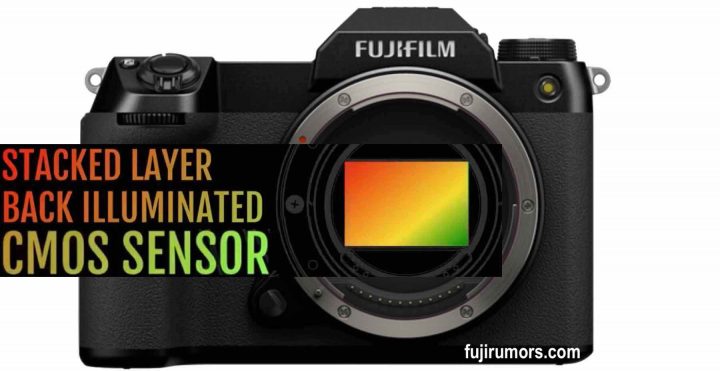
I guess it is safe to assume that Fujifilm Nordic is referring to the stacked APS-C sensor to be announced in May 2022 (as Fujifilm officially teased here) and hence hint to the possibility that the stacked technology could find its way also into future GFX cameras.
Just to be clear, so far in terms of rumors I have no hints about any stacked sensor GFX camera coming. Of course this doesn’t mean it won’t come, I just say that at the time of this article I have no information about it.
The summary above is just an extract of Soren’s part of the talk with Fujifilm Nordic. But actually the whole 2 hours talk also with the official Fujifilm X Photographers is well worth a listen. So make sure to check it out down below.
Fujifilm X Photographer Eric Bouvet is also a war photographer who has ben to Ukraine already a few times, for example to photograph the “Heroes from Maidan” and to other war zones such as in Iraq here.
Now he is back in Kyiv to document the war unfolding in Ukraine.
So, if you want to see what is happening in Ukraine also through the eyes of Eric Bouvet with his Fujifilm GFX, make sure to follow him on Instagram here.
Ron Haviv
Also on the field with his Fujifilm X-T4 is Ron Haviv.
Over at his instagram here he is sharing powerful, touching and dramatic images that show who really loses in wars: the civil and innocent people, who just want to live their lives in peace.
Be aware that these are strong images coming from a war zone.
I guess at this point I should say something about the fact that people use X and even GFX gear to photograph the war proving that you can well do documentary style photojournalism with Fujifilm gear (even though many on forums and youtube say that’s impossible), but I am not in the mood for any further comment on that.
All that matters is that there are some incredibly courageous photographers are out there, documenting what is happening, no matter which gear they use. Because what we need these days is more information, not less.