Skip to content

I’ve Traveled the World with Fujifilm’s ‘Worst’ Lens and I Loved it – The Only Flaw, and the One (Fujifilm-Teased) Lens That Could Replace It

I have recently asked you what you consider the best and worst Fujifilm related gear announced in 2025 (third party AF lenses included).

Well, a fellow Fujifilm X-H group member declared here the XF18-135mm as the worst announcement.

Now, besides the fact that the Fujinon XF18-135mm was announced in mid 2014, hence it was not really part of our big survey, I thought it was an interesting comment and that maybe it was time to talk a bit about this lens.

A lens I own by the way, and that made me sell these two lenses for it.

Now, as we said, the Fujinon XF18-135mm was announced in 2014, hence at a time when the Fujifilm X system was relatively new on the market.

So while it is reasonably to expect that the most modern Fujinon lenses perform better than those launched 11 or 12 years ago, I’d dare to say that anyway the Fujinon XF18-135mm is actually a pretty decent performer. I’d say an even very good performer for what it is.

The true problem of the lens is another one: I think it is the one Fujinon lens that suffers most from sample variation, meaning you might get an excellent copy — or a noticeably weaker one — simply due to manufacturing tolerances.

While Fujifilm has drastically improved this aspect of manufacturing over the years, at the time the XF18-135mm was released — and particularly with that lens — sample variation was a real concern for early buyers.

This explains why some are very happy with this lens (for example me), while others are not.

In my case, here are some pictures I took with it:

As you can see, the Fujinon XF18-135mm has been a loyal companion to me for over a decade. It has traveled with me all over the world, and I’ve always appreciated both its flexibility and its image quality.

That said, I probably ended up with a particularly good copy.

So if you’re thinking of buying one — especially second-hand — I’d definitely recommend trying it first and taking a few test shots.

But with that said, for every person who had a less-than-ideal experience with this lens, there are many more who genuinely appreciate it.

In fact, the Fujinon XF18-135mm was even used to shoot the official stills for the blockbuster Dunkirk.

And we have had some interviews with fellow X shooters, who declared it their favorite lens:

So I call myself a very happy Fujinon XF18-135mm owner.

But if I had to pick — or better, nitpick — one aspect that occasionally bothered me just a little, it would be the range. If only it were a touch wider on the short end, and offered just a bit more reach on the long end, it would come very close to perfection.

In short: make it a true, awesome superzoom!

And you know what?

Fujifilm has already revealed the estimated main specs and size of exactly such a lens in their “10 lenses under consideration” survey.

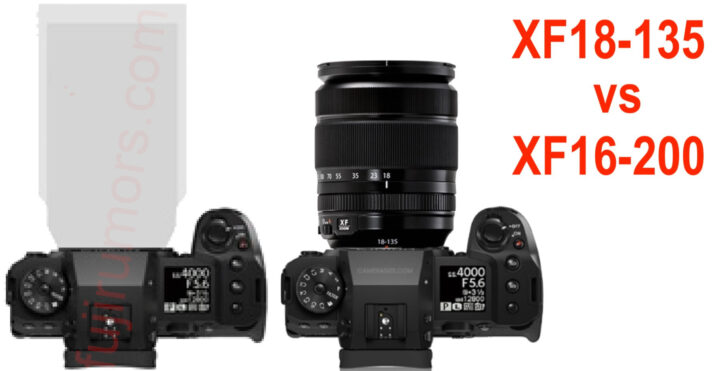
And here on FujiRumors we already made a specs and side-by-side size comparison between the XF16-200mm and XF18-135mm.

If Fujifilm manages to keep the XF16-200mm on the smaller and lighter side of their current estimates, then that might be the one lens capable of replacing my XF18-135mm.

But until that day comes — if it ever does — I’ll proudly call myself a very happy XF18-135mm owner.

If this lens is good enough to shoot professional stills on the set of a multi-million-dollar blockbuster, then it’s certainly good enough for my far more humble needs and modest skills.

There’s just one important note: especially if you’re buying an older, second-hand copy, make sure to test it first. No other Fujinon lens is known to exhibit sample variation quite as strongly as the XF18-135mm.

Black Friday at B&H Photo

Black Friday at Amazon USA

Black Friday at Amazon CANADA

Black Friday at Adorama

Fujifilm X-Pro4 – Time to Remove the OVF, or the EVF… and Everything in Between

Fujifilm X-Pro4

Is it the Fujifilm X-T6?
Nope.

Then it must be the X-H3, right?
Not that one either.

Ah, so surely the X100VII!
Forget about it.

The camera people ask me about the most — and the one I get the longest wish lists for in my inbox — is the Fujifilm X-Pro4.

And since so many of you have shared your hopes and ideas, it’s time for a dedicated Fujifilm X-Pro4 Wishlist Roundup on which I share some of your messages.

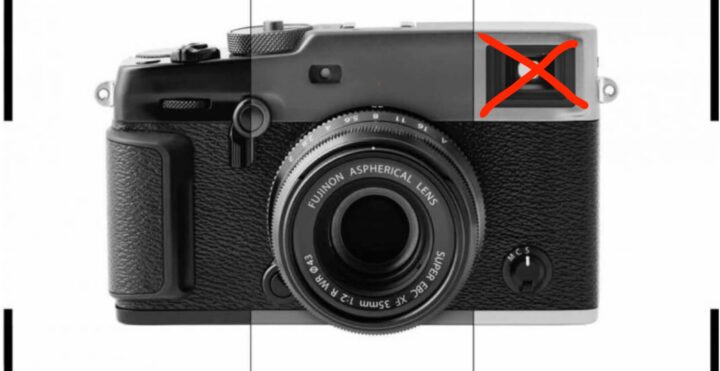
They include the very controversial opinion to remove the optical viewfinder and go the Leica M EV1 path. If Leica was brave enough to make this step, why shouldn’t Fujifilm?

But, as you can read here, some also want the complete opposite: get rid of the EVF and only keep the OVF (+ERF).

In my opinion Fujifilm should not ditch the OVF. On the contrary, they should make it even better. And early rumors suggest they are indeed doing just that. But at the same time do not remove the EVF. So, in short: an improved hybrid viewfinder is the way to go according to me.

X-Pro4 Wishlist

** CLICK HERE to Read the Rest of the Article **

Spooky Fujifilm 🧟‍♂️ Cameras Brought Back to Life via Firmware Update — And Let’s Talk Kaizen

Spooky Halloween is here… 🎃

It’s the night when ghosts rise from their crypts — and it reminded me that Fujifilm, too, has (or had?) a rather unnatural power: the power to bring its cameras back from the dead with a little bit of firmware Kaizen magic.

Cameras that refused to die.

Or better yet: cameras that Fujifilm simply did not allow to die — resurrected again and again through firmware updates that breathed new life into them.

Scary times in which those who wrote excellent Fujifilm camera manuals were doomed to rewrite them over and over again — slowly driven to madness by Fujifilm’s relentless Kaizen spirit, as they struggled to keep up with all the new features added to cameras that refused to stay dead.

So let’s talk about those times.

And let’s talk about where we are now and what has changed (if anything).

🧟 So it Began – The First Resurrection

** CLICK HERE to Read the Rest of the Article **

What We Lost When Cameras Got Better — and How Fujifilm Is Trying to Give It Back

What We Have Lost

I remember…

I remember when at the age of 16 I bought my first Fujifilm Quicksnap camera.

We were going on a 4-day trip with my classmates to Siena.

And I remember how I cherished those 27 shots — how intentional I tried to make every single one of them. Every frame mattered so much to me.

The photos might have been flawed — soft, overexposed, touched by grain and blur. But the moments were flawless. I waited for them, guarded each frame, and only pressed the shutter when I felt that it truly mattered.

But somehow all of that went lost with the arrival of digital.

That sense of loss — of meaning, of connection — is exactly what YouTuber Gerald explores in his video “What We Lost When Cameras Got Better”. He looks back at what we unknowingly traded away when photography became effortless, and how we might get those things back.

We thought we were upgrading to digital.
But we weren’t — we were trading.
And this is what we lost in the exchange, according to Gerald.

Intentionality –

Film forced us to think before shooting because every frame was limited and costly.
Digital made shooting cheap and endless, which made each photo mean less.

Presence –

With film, you stayed in the moment.
With digital, we’re constantly checking screens, pulled out of the experience.

Anticipation –

Waiting to see developed photos made us value them more.
Instant previews make us forget instantly — memories don’t have time to form.

Imperfection –

Film had character: grain, light leaks, and “happy accidents.”
Digital and AI perfection removed uniqueness; everything looks the same.

Mindfulness –

Shooting film is a tactile, focused ritual.
You set ISO once, advance manually, and truly participate in the process.
Digital gives results; film teaches discipline.

Conclusion

Technology didn’t just upgrade photography — it also caused a trade-off.
We gained convenience but lost meaning.
Unlimited shots led to unlimited forgetting, while limitations gave us value.

How to Get It Back

You don’t need to abandon digital. Instead, adopt the film mindset.

By slowing down and paying attention, you’ll remember your photos — and the moments — again.

So What has Fujifilm to Do with This?

** CLICK HERE to Read the Rest of the Article **

A Forgotten Fujifilm Camera Shines on Netflix — and Teaches a Hard Lesson

A Moment of Glamour for a Forgotten Fujifilm Camera

Anyone remember this camera?

Nope?

In fact, even Fujifilm itself might have forgotten about this little beauty — so much so that it never got a successor.

That’s why we had to include it in our list of the Top 10 Fujifilm camera flops of all time:

But to be fair, it didn’t flop because it was a bad camera. Far from it. It was compact, stylish, and wonderfully portable, earning praise from many photographers for its looks and design.

What really doomed it was its overly complicated manual lens ring — that pull, twist, click dance nobody really wanted to perform every time they turned the camera on. Elegant design met awkward usability… and sadly, usability lost.

Did you guess the camera before I said it?

** CLICK HERE to Read the Rest of the Article **

From Newcomer to Legend? Fujifilm X-E5 Skyrockets in FujiRumors Ownership Rankings

A while ago we tried to evaluate the success of the brand new Fujifilm X-E5 by launching a survey on which camera the FujiRumors community owns.

8,279 people dropped a total of 17,894 votes, and here are the results.

  1. X-T5 = 13%
  2. X100VI = 7%
  3. X-T3 = 7%
  4. X-T2 = 5%
  5. X-E5 = 5%
  6. X-T4 = 4%
  7. X-H2 = 4%
  8. X-Pro2 = 4%
  9. X-H2S = 4%
  10. X-T1 = 3%
  11. X-T30/X-T30II = 3%
  12. X-E3 = 3%
  13. X-Pro3 = 3%
  14. X100V = 3%
  15. X-E2/X-E2S = 3%
  16. X-H1 = 3%
  17. X-E1 = 2%
  18. X-T50 = 2%
  19. X-S20 = 2%
  20. X-E4 = 2%
  21. X-T20 = 2%
  22. X-S10 = 2%
  23. X-Pro1 = 2%
  24. X100F = 2%
  25. X-M5 = 1%
  26. X100 = 1%
  27. X70/XF10 = 1%
  28. X10/X20/X30 = 1%
  29. X100S = 1%
  30. X-T10 = 1%
  31. X100T = 1%
  32. X-M1 = 1%
  33. X half = 1%
  34. X-A1/A2/A3/A5/A7/A10/A20 = 1%
  35. X-T100 = 0%*
  36. XQ1/XQ2 = 0%*
  37. X-T200 = 0%*
  38. XF1 = 0%*
  39. X-S1 = 0%*
    *denotes 0,4% or less

So, in less than 1 month, the Fujifilm X-E5 has already surpassed legends like the Fujifilm X-T4 and caught up with one of Fujifilm’s most sold cameras ever, the Fujifilm X-T2. And right now it is just 2% points away from catching up with the Fujifilm X-T3 and X100VI.

If we were to group it in lines, these are the results.

  1. X-T* = 32.21%
  2. X100* = 15.20%
  3. X-E* = 14.61%
  4. X-H* = 9.98%
  5. X-Pro* = 8.56%
  6. X-T** = 8.41%
  7. X-S** = 4.18%
  8. X-M* = 2.25%
  9. X70 / XF10 = 1.24%
  10. X10/X20/X30 = 1.18%
  11. X half = 0.64%
  12. X-A* = 0.56%
  13. Other = 0.51%
  14. X-T100/200 = 0.47%

The Fujifilm X-E5 has pushed the X line close to the X100 line on the 3rd spot of the most owned Fujifilm camera lines by FR-readers.

Is this a success?

That’s too early to say. But it is a solid start, actually the best start of any X-E camera so far (and by far). And this makes me confident in the future of this camera line.

Follow FujiRumors on PatreonFacebookInstagramRSS-feedYoutubeFlipboard and Twitter

Fujifilm X-T40/X-T30III: Finally Closing the Gap?

go to minute 5:53 of the video to hear the thoughts of Patrick about it

One of the critiques Fujifilm gets is that they have a confusing camera lineup with too many lines.

The Fujifilm X-T30III or X-T40 just fueled again this criticism, but I think this time they don’t deserve it.

First things first: Fujifilm has indeed likely canceled 6 X series lines already (or even 7, if we consider X70 and XF10 not part of the same line):

So we have a total of possibly six canceled lines.

And how many lines has Fujifilm introduced?

Well, 2 new lines have been introduced recently: Fujifilm X half and the Fujifilm X-T50,

Yes, also the Fujifilm X-T50 is a “new line”, because as we told you in this rumor, it does not belong to the X-T10, X-T20, X-T30 line since Fujifilm will launch a dedicated successor for that line (X-T40/X-T30III) in 2025.

And actually there will also be a third totally new line soon, and that camera is already listed at BHphoto here.

In short: Fujifilm has axed more lines than it has created new ones.

With all that said, I think launching the Fujifilm X-T40/X-T30III makes totally sense.

Why?

Well, because Fujifilm’s entry level line has basically been axed (except X-M line) and their other lower-end to mid-range models got an overall specs upgrade with a consequantial significant price increase (X-E5 and X-T50).

At this point in time, Fujifilm has no true entry level camera with viewfinder and that’s a problem if you ask me.

But how could a Fujifilm X-T30III/X-T40 look like?

Speculations (NOT RUMOR)

  • my realistic scenario: X-T30 II body with 5th generation processor and latest firmware
  • my hope scenario: X-T30 II body but with X-T100 alike unique screen mechanism – we reported here
  • my dream scenario: X-T50 body with 4th generation 26MP sensor

Since I think that price matters when it comes to the Fujifilm X-T40 or X-T30 III, I believe they’ll go for the first scenario I mentioned above.

But feel free to let us know in the comments what you think about all of this.

Fujinon XF 16-200 vs XF 18-135 Size Comparison and Thoughts

We recently took a look at the 8 remaining lenses Fujifilm has “under consideration” for future release.

And since I love this lens here, I picked as my favorite future lens the Fujinon XF16-200mm superzoom.

Now, I know it would make me look more “Pro” if I’d advocate for red-badge fast lenses.

But hey, if Melinda Sue Gordon shoots the official backstage images of the Dunkirk blockbuster with the XF18-135mm lenswe reported here – then I guess the lens is plenty of good enough also for my much more humble needs.

With that said, I decided to take a closer look at the potential XF16-200mm, based on specs given to us by Fujifilm (and turned into the above silhouette by FR-reader Hiergeist), to see if the XF16-200mm could really be a potential replacement for the XF18-135mm.

  • Fujinon XF 16-200mm
    – length 120-140mm
    – diameter 70-80
    – weight 600-800g
  • Fujinon XF 18-135mm
    – length 97.8mm at minium extension and 156mm at maximum extension
    – diameter 75.7
    – weight 490g

We can see: especially on the shorter side of the range given to us by Fujifilm, the XF16-200 would be quite close in size to the current XF18-135mm (just about 22mm longer and 110g heavier).

If Fujifilm would launch the Fujinon XF16-200mm, then I would surely buy it to replace the XF18-135mm.

In fact, after I bought the XF18-135mm I sold both my XF18-55mm and XF55-200mm. But having again the option to go all the way at 200mm and also to go wider at 16mm would be very welcome, especially if the overall size and weight increase are contained as suggested by the specs shared by Fujifilm.

So, I stand by my wish: if I have to pick one, I would like the Fujinon XF 16-200mm.

But again, feel free to drop your wish and vote here.

Follow FujiRumors on PatreonFacebookInstagramRSS-feedYoutubeFlipboard and Twitter

The Curse of the X‑E Line: Can the Fujifilm X‑E5 Break the Spell?

Fujifilm X-E – The Cursed Line

There was a time, when Fujifilm was only offering rangefinder X series cameras.

Well, that’s if you don’t consider this camera here, which I guess we’ll never know why Fujifilm called it an X series camera.

But anyway, rangefinder was Fujifilm’s quiet re-entry in the mid-higher end digital camera market (their previous attempt was this one).

And silently, on tiptoes, Fujifilm carved out its very small niche of truly passionate photographers.

The X-E1 is Born

The Fujifilm X-E1 was definitely one of the best expressions of this understated approach into the mirrorless camera market: no thunders, no specs brags, just beauty and joy encapsulated in a wonderful camera body.

But the Fujifilm X-E1 would become the last X-E camera with a relatively quiet and tranquil life.

Because Fujifilm’s priorities started to shift, their ambitions to grow, and the X-E line started to be on the edge of survival.

X-E2 – The Struggles Begin

Let’s begin our tale of struggles with the Fujifilm X-E2, which btw I owned and destroyed when I had to jump into the Mekong river to avoid getting smashed by the Li Phi waterfalls.

Fujifilm had the brilliant idea to launch the Fujifilm X-E2 just 3 months before they announced the Fujifilm X-T1, which came in the more popular SLR styled package and offered superior specs like weather sealing, UHS-II card slot and the largest EVF on any mirrorless camera.

The X-T1 was Fujifilm’s statement to the photography world: we want to go more mainstream now! And as a consequence it stole the show (and sales) to the X-E2.

The Fujifilm X-E2 was followed by the Fujifilm X-E2S, which is basically an X-E2 with an auto button. So we can ignore that one.

The X-E3 Problem

** CLICK HERE to Read the Rest of the Article **