Skip to content

The GFX Shockwave: How Fujifilm Is Breaking the Full-Frame Narrative

GFX Rise

As we have seen, the GFX system is steadily growing. So I guess it’s time to dedicate it an image roundup.

But before we share the images (scroll to the bottom to enjoy them), I have a few thoughts to share.

A Peaceful Post

And look, guys. It’s holiday time, Christmas is near and the last thing I want is that we jump on each other and fight in the comments about little things.

That’s why I don’t want to publish anything controversial that could trigger hate in our hearts, divergent opinions in the comments and a good dose of sh*tstorm towards my humble person.

So I thought: what could a super-peaceful topic be? One we all agree upon?

And well, I found it after once again I read a comment that pops up regularly in the comments and on forums: Fujifilm’s marketing is contradicting, as they initially said sensor size does not matter, but then released the GFX.

Now that should be a non-controversial and peace-triggering discussion, right?

So let me share my point of view, which of course is not an opinion, but an irrefutable truth nobody shall dare to question!*
*I am kidding, guys

Full Frame’s Contradiction?

Fujifilm always said it: sensor size is not everything.

In fact, smaller sensors have a series of advantages, from speed, size, price and more, which we have listed here. And also in terms of computational photography the smaller the sensor, the easier you can make its magic work. So a smaller sensor might be even more future proof from this point of view.

But that’s just BS according to Sony, Canon and Nikon, who neglect their APS-C lineup and delivered the opposite message: a bigger sensor is always better.

And look, this narrative was fine…

… until the Fujifilm GFX came along.

Suddenly there was a camera on the market, with a sensor 70% bigger… of fuller… than full frame and in some cases even smaller bodies than some full frame cameras.

At this point the full frame mantra “a bigger sensor is always better” was no longer a proper marketing or forum phrase, as this would implicitly mean that full frame shooters could level up their game and get 70% better “Image quality” (whatever that means) by using the Fujifilm GFX system.

So the new full frame narrative became: sensor size is not everything. Smaller sensors have advantages in terms of speed, size, price and more.

That’s correct, but does it sound familiar?

You got it, that’s exactly what Fujifilm said right from the beginning: sensor size is not everything. Finally also the Full Frame world got this message.

Look, everything is a compromise, a balance, a matter of choices and priorities. And there is no “best” system. Sensor size is just one of the many aspects to take into account when choosing your system.

Fujifilm’s Contradiction?

So we established it by now: many Full Frame supporters contradicted themselves by first saying that a bigger sensor size is always better and then adopting Fujifilm’s point of view that a bigger sensor is actually not always better.

But did Fujifilm contradict itself too?

Because if sensor size is not everything, why even bother launching the GFX system?

Well, I see no contradiction, and here is why.

First off: when launching a second system, Fujifilm did not look at the market as a whole, but at their own offering. And from their point of view, precisely because sensor size is not everything, the difference between APS-C and Full Frame was not enough to justify an additional FF system.

Add to that the plethora of advantages that X-Trans offers (less color noise, less moire, more pleasing film-like grain and more), and going Full Frame made even less sense.

And yes, some trashtalked X-Trans for having some flaws, but we debunked those a long time ago with hardcore facts.

So, for Fujifilm, the combination APS-C and X-Trans was the way to go.

But Fujifilm also realized one thing: there are photographers out there, who can make compromises on many things, but not on image quality – and here is where the Fujifilm GFX system comes in.

If you are anyway willing to compromise on image quality for other benefits (smaller size, more affordable, faster sensor readout, etc), then APS-C is probably the sweetspot (as DPReview, Petapixel and other claimed here).

But if you are not willing to sacrifice on image quality (without breaking your bank account) then Fujifilm GFX is the way to go: it will give you the best image quality possible at a reasonable price.

Yes, you are going to spend more money, you will have bigger lenses, the sensor readout will be slower and what not. But if you can accept those compromises, you’ll be rewarded with the best image quality you can find on the market in a still portable (I talk out of experience) and fairly priced package.

So, there is no contradiction: for Fujifilm it just made sense to offer APS-C for those, who want a balanced system and GFX for those who can’t compromise in image quality. It’s consistent and logical.

I am not here saying this was the right choice. Only time will tell. But it’s a choice I understand from Fujifilm’s point of view.

Enough Talk

And now to the true point of this article: the images!

I went through the work shared at our Fujifilm GFX group and selected some images.

This is just a little taste of what the GFX system can do for you ;).

Esteban Gil – shared here
GFX100 You shouldn’t use non native lenses on the GFX.
My cheap laowa 17mm: Hold my beer
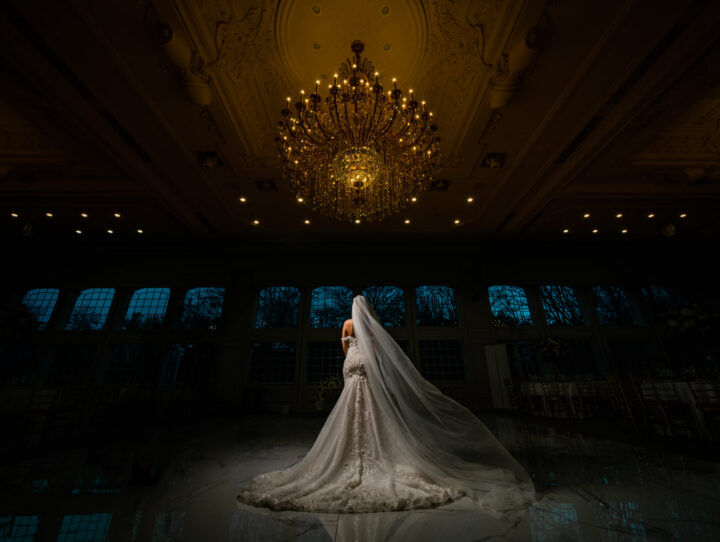
Magbox+AD300
_ _ _

** CLICK HERE to Read the Rest of the Article **

Fujifilm Camera Ownership Ranking: GFX Increases and the Real Ranking of Sony, Canon, and Nikon among FR-readers

The Ranking Results

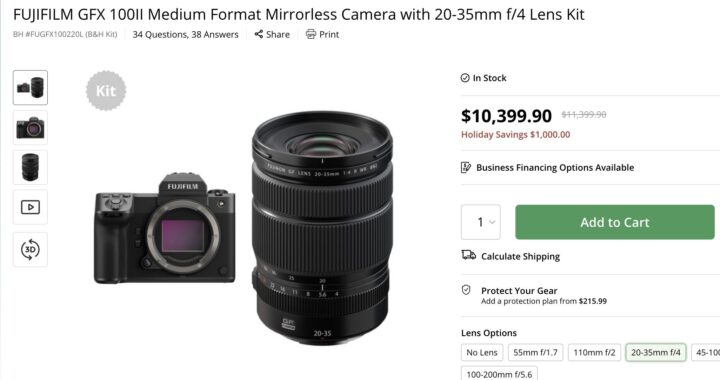
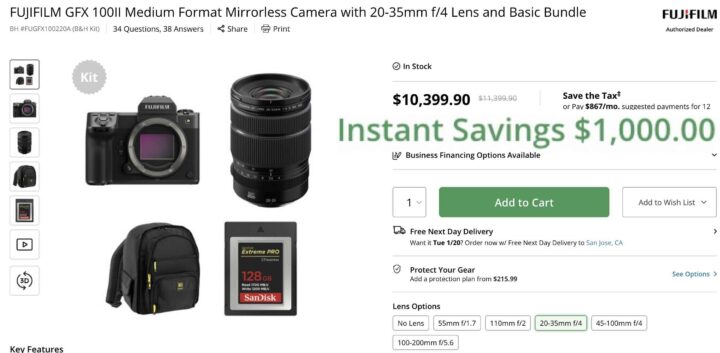
The Top Deal – save $1,000 + Free CFexpress Type B card and Camera Bag

4.5 years ago I launched a survey on FujiRumors here, asking which camera system you own.

And since that was such a long time ago, I decided to launch a new survey again recently.

So what has changed in these 5 years?

Let’s check it the survey results first:

2021: I own Fujifilm X APS-C system only (58%)
2025: I own Fujifilm X APS-C system only (52%)

2021: I own Fujfilm X APS-C system + other systems (Sony, Canon etc.) (25%)
2025: I own Fujfilm X APS-C system + other systems (Sony, Canon etc.) (25%)

2021: I own both, the Fujifilm X and the GFX system (6%)
2025: I own both, the Fujifilm X and the GFX system (8%)

2021: I don’t own any Fujifilm Camera (4%)
2025: I don’t own any Fujifilm Camera (4%)

2021: I own Fujifilm GFX MF system + other systems (Sony, Canon etc.) (3%)
2025: I own Fujifilm GFX MF system + other systems (Sony, Canon etc.) (3%)

2021: I own Fujifilm X, Fujifilm GFX + other systems (Sony, Canon, etc) (2%)
2025: I own Fujifilm X, Fujifilm GFX + other systems (Sony, Canon, etc) (5%)

2021: I own Fujifilm GFX MF system only (2%)
2025: I own Fujifilm GFX MF system only (3%)

Ups and Downs

(-) The number of Fujifilm APS-C only shooters only has decreased by 6%.

(+) We see a 2% increase in GFX + Fujifilm X shooters (now 8%).

(+) There is a 3% increase in GFX + Fujifilm X + other brands shooters (now 5%).

(+) And finally a 1% increase in Fujifilm GFX only shooters (now 3%)

Same Same

(=) 25% still own Fujifilm APS-C + other systems

(=) 4% of people reading this blog do not own any Fujifilm camera yet

(=) 3% of people shoot Fujifilm GFX + other systems

Summary:

In 2021, 91% of readers owned a Fujifilm X series camera
In 2025, 90% of readers own a Fujifilm X series camera (-1%)

In 2021, 13% of readers owned a Fujifilm GFX camera
In 2025, 19% of readers own a Fujifilm GFX camera (+6%)

In 2021, 30% of Fujifilm X/GFX shooters also owned another system
In 2025, 33% of Fujifilm X/GFX shooters also own another system (+3%)

The number of people not owning a Fujifilm camera is stable at 4%.

Conclusions:

The Fujifilm X system remains the dominant choice among FujiRumors readers, with APS-C ownership barely shifting over the past 4.5 years (from 91% to 90%). What has changed is how people build their kits around it. Fewer photographers are sticking exclusively to APS-C, while more are expanding into GFX or mixing Fujifilm with other brands.

GFX shows the strongest momentum: its ownership has grown from 13% to 19%, driven both by X shooters adding medium format to their setup and by a small rise in GFX-only users. Multi-system ownership is also up, with 33% of Fujifilm shooters now pairing their Fuji gear with other brands.

Despite these shifts, the share of readers who don’t own any Fujifilm camera at all remains unchanged at 4%.

In short: the X system is still the backbone of the community, but GFX and multi-system hybrid setups are steadily on the rise, with GFX experiencing the biggest rise.

What This Means:

A 1% drop in Fujifilm APS-C ownership is negligible. Especially considering that if rumor sites covering other brands would launch the same survey, they’d probably see a sensible increase in Fujifilm owners (for example, Canon, Sony and Nikon shooters adding a Fujifilm X100VI to their camera gear setup).

But when it comes to FujiRumors readers, there are 6% less people shooting only with APS-C (from 58% to 52%), with most adding the GFX to their personal linuep.

And yet, despite more photographers expanding their kits with other systems, the majority remain loyal to their Fujiflim APS-C cameras with only a -1% drop. That probably indicates that no matter if they buy an additional Full Frame or Medium Format system, they still value the advantages of owning a Fujifilm APS-C system.

At the same time the rise of Fujifilm GFX is slow but steady. And quite frankly, the GFX system would explode and reach immense numbers overnight, if only Fujifilm would make this GFX camera, which Fujifilm has already shown us in its mock-up version. But we got the Fujifilm GFX Eterna 55 instead… oh well…

Last but not least, only an additional 3% of FR-readers are “flirting” with other systems and have added a non-Fujifilm system to their lineup (30% in 2021 and now 33%).

🇺🇸 Fujiflm USA Deals – Save Up to $1,000 on GFX and X Gear 🇺🇸

Note: similar deals are currently running in Europe.

The Top Deal – save $1,000 + Free CFexpress Type B card and Camera Bag

X Cameras

X Lenses

GFX Gear

* freebies at BHphoto include a free CFexpress Type B Card and a camera bag

Instax Gear

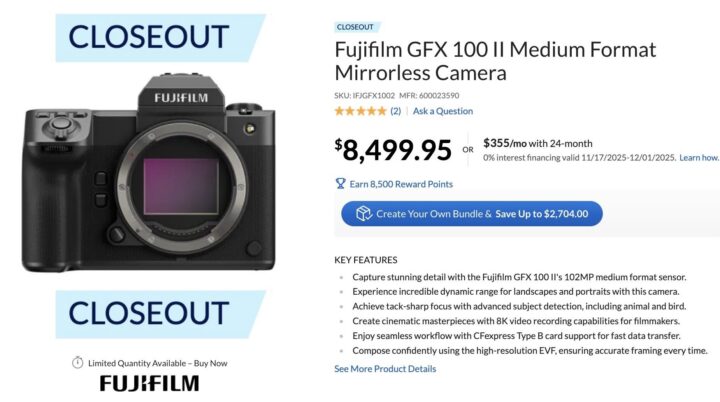
Fujifilm GFX100 II in CLOSEOUT at Adorama and Massive $1,000+ GFX100II Bundle Price Drop at BHphoto – UPDATED

UPDATE: Adorama briefly marked the Fujifilm GFX100 II as a “closeout” product (see screenshot above), which prompted speculation about an upcoming replacement. We reported on it earlier today, noting how odd it seemed. Adorama has now corrected what was apparently an error, and the GFX100 II is no longer listed as closeout. The original article has been removed.

NOTE: the massive $1,000 rebate on the GFX100II bundle (+ freebies at BHphoto) is not a sell-out to make place in the warehouse for a replacement. The Fujifilm GFX100II is in full production and we know knothing about a replacement coming in the next few months.

There are great deals also Fujifilm X APS-C gear.

The Top Deal – save $1,000 + Free CFexpress Type B card and Camera Bag

X Cameras

** CLICK HERE to Read the Rest of the Article **

Black Friday is Here – These are The Best Deals, from Fujifilm X/GFX, SmallRig, Software Savings & More

Black Friday is in full swing. Tons of deals have dropped, including huge rebates on X and GFX gear in USA.

So, time to give you the complete overview:

Here are the deals in detail for USA (a more detailed list for Europe can be found here).

Black Friday US/CA Deals by Brand/Store

at B&H Photo

at Amazon USA

at Amazon CANADA

at Adorama

Third Party Chinese Lenses

Chinese Third Party Lenses
(NOTE
: Scroll further down for Sigma, Tamron, Tokina Deals)

Storage Media Deals

SD-Cards + CFexpress Cards

Vintage Flash

Godox

Viltrox

Software

Peak Design + Think Tank

🇺🇸 Fujifilm X/GFX Deals in USA 🇺🇸

X Cameras

X Lenses

GFX Gear

* freebies at BHphoto include a free CFexpress Type B Card and a camera bag

SmallRig

SmallRig for Fujifilm

SmallRig General

Batteries + Mixed Deals

Mixed Deals – Batteries Included

Ulanzi

Sigma AF X Mount Lenses

Tamron AF X Mount Lenses

Sirui AF+MF X Mount Lenses

Tokina AF X Mount Lenses

Manual Focus + Electronic Contacts X Mount Lenses

Manual Focus Lenses X Mount Lenses

Fujifilm GFX Mount Lenses

Accessories & Flash

Additional Deals

Memory Cards

External SSD

Apple Products

Fujifilm USA Big Black Friday Savings – Save Up to $1,000 on X/GFX Cameras and Lenses

Fujifilm has just launched huge Black Friday Deals on Fujifilm X/GFX Lenses and Cameras. Below are the deals.

You save up to $1,000.

Similar deals are currently running in Europe.

X Cameras

X Lenses

GFX Gear

* freebies at BHphoto include a free CFexpress Type B Card and a camera bag

Instax Gear

Fujifilm Europe Drops Massive (and a Bit Confusing) X and GFX Deals

Fujifilm Europe has dropped massive X and GFX deals all over the continent. The deals start today and end January 14.

Depending on the country, some are cashback deals, some are instant rebates, and some are mixed rebates (instant + cashback). I will list details (+ link to pages to claim back money) below.

If you purchase at Amazon, make sure you buy directly from Amazon (not third party). I have seen Amazon listed as official retailer by Fujifilm Germany, Italy and UK. In France I did not see Amazon listed as qualified retailer.

Also, some deals are better at Amazon than other stores: for example, Amazon UK has the X-T5 for £1449 which is sold for £1,549 and WexUK and Co (that’s an instant rebate).

So, that’s the easy part.

The complicated part I will share it at the bottom.

But for now I’ll just say that given the complications and regional differences in Europe, I will list below only the deals for UK and Germany (the German deals as listed at Calumet.DE, because Fujifilm Germany has not put up the official deal page yet). But there are rebates also in France, Italy, Belgium, Austria and more.

NOTE: In Germany so far the X-T5/X-H2/S bodies are not listed as rebated, but other EU countries include X-T5, X-H2 etc in their cashback offer.

If you want to support FujiRumors, feel free to use any of the affiliate links below to access your store and make the purchase:

X Series Cameras

X Series Lens Deals

GFX Deals

The deals are confusing, mainly because Fujifilm Germany and Italy either do not report about the deals, or they contraddict themselves. So let’s see it country by country:

UNITED KINGDOM:

GERMANY

ITALY

  • the official flyer image says X deals are instant rebates and GFX cashback. Although once you click the X deals, they list all items and they show up as cashback, with a cashback claim-money-back page that is not clickable (unlike the GFX claim-back-money page.
  • Fujifilm ITA GFX Deals Clam-Back Money Page
  • Italian Deal Page here

FRANCE, BELGIUM and CO

  • Go to this page and then on the top right select your country/region to see the deals in your area

Fujifilm Renewed Offer on Amazon: Fujifilm X-T3, X-H2, XF Lenses, X Half, GFX and More

Some Fujifilm gear is now available renewed at Amazon via third party sellers.

Selected X Camera Deals

Selected XF Lens Deals

Selected GFX Deals

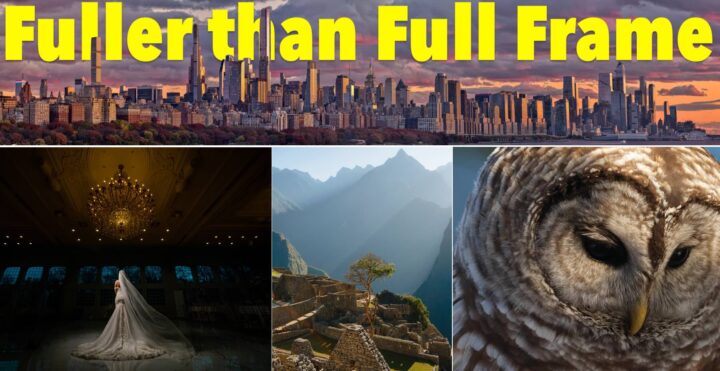
Go Fuller than Full Frame: Fujifilm GFX Shoots Weddings, Scans Films, Photographs Races… but the Perfect GFX is Still Missing

Today’s roundup is entirely dedicated to the Fujifilm GFX system.

And you know what? I can proudly call myself a convinced GFX owner too — I actually own this camera along with these two lenses!

Of course, every system, every camera, and every lens involves some level of compromise.

But if the one area where you refuse to make any compromise is image quality, then the Fujifilm GFX system is the way to go.

And yet, as much as I admire the sheer power of the GFX, I can’t help but wonder why Fujifilm never gave us the ultimate GFX camera — the one they already teased back in 2019 with that X-T–style GFX mock-up. That camera would have instantly become Fujifilm’s best-selling GFX ever and a serious threat to full frame.

With that said, what we have today is already much loved and highly appreciated by many. So time to dedicate it an own roundup.

Some used it for weedings. Other for bike races. Others scanned film and other used it with the Laowa 100mm F2.8 tilt shift.

Fujifilm GFX Roundup

** CLICK HERE to Read the Rest of the Article **

Why the Fujifilm GFX100 II Was the Only Camera Trusted for King Charles’ Portrait

I have this little habit: whenever I’m tidying up the chaos my two kids leave behind in the apartment, I put on a podcast.

Today, I came across one that I found particularly fascinating and wanted to share with you.

In the Double Exposure Podcast, Hugo Burnand talks about creating his portrait of King Charles—covering everything from location scouting and preparations, to the actual shoot, the lighting setup, his interactions with the king, the post-processing, and more.

Interestingly, Hugo drew inspiration from a painting of Prince Philip by Ralph Heymans. The painting depicted the Prince in the very same corridor where Hugo would later photograph King Charles.

The catch? That corridor is notoriously dark, making it a real challenge for Hugo and his team.

For this challenge, he chose just one camera: the Fujifilm GFX100 II—the camera he always turns to when he needs to capture a truly important image.

You can watch the video to see the clever techniques and setups his team used to overcome the challenges. The result is a portrait with a striking, almost painterly quality.

Of course Huge credits his team for the amazing results, but at some point he says:

full praise to my team […] because I think it looks like natural daylight thourghout and it also has a painterly feel to the photography.

While I give my team an enormous praise… actually the camera was really important, the medium format Fujifilm GFX 100 II.

Now, I warmly invite you to listen to the full podcast. But since I know many of you are particularly interested in what Hugo had to say about the Fujifilm GFX100 II in this context, I’ve extracted the key points below:

  • painterly feel in the image
  • fantastic dynamic range
  • great tonal gradation
  • if he’d have taken the image on a phone, it would be quite contrasty and harsher
  • it’s not about reproducing the image in big prints that he needs GFX, because even when reproduced small it has a greater quality intensity
  • the image was shot at ISO 3200
  • in a regular Canon he might risk shooting at ISO 800, and then he starts losing comfort
  • the Fujifilm GFX is amazing in low light
  • you can see the details of the king’s eyelashes in the image, even at ISO 3200

(Quick pause: some “smart” commenters will argue he used the wrong ISO and should have gone lower with flashes. I strongly suggest they actually watch the video before making that judgment)

  • the image looked like a painting by someone like Velázquez
    (personal note: I never thought I’d stand mesmerized in front of a painting for 15 minutes, but it happened to me in Madrid with Las Meninas of Velazquez… what a masterpiece)
  • And when Hugo saw the finished portrait of King Charles, he admitted that, for the first time, he felt intensely proud of his own work

(Another pause for the quick critics: some might say there is too much space above the king’s head. That’s intentional. There’s actually a rule in royal portraiture: you must leave enough room above the head to fit a crown.)

Editing?

  • no photoshop
  • Hugo explained that his adjustments were no different than what could have been done in the darkroom on a wet print

Finally, if you’d like to see this portrait (and others), Hugo has set up a dedicated website: crownportraits.co.uk.