Skip to content

Fujifilm X-T6 and X-H3 with 80 Megapixel? Let’s Talk About it!


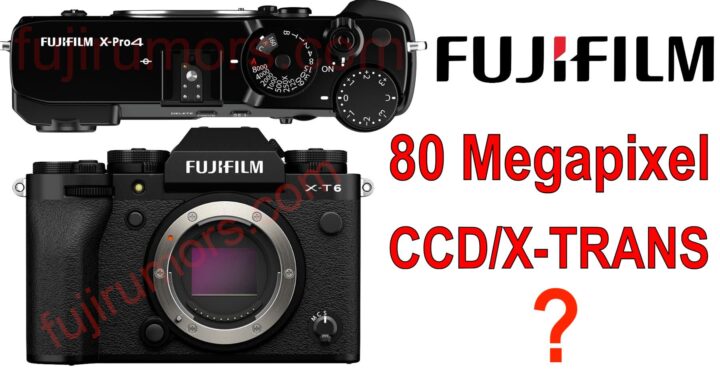
Over the past year, I’ve been flooded with emails asking if the 80-megapixel Fujifilm X-Trans VI sensor rumor could be true.

And for more than I year now I’ve chosen to stay silent on FujiRumors and replied to each email individually.

But recently yet another message arrived asking the same question.

So, after 12+ months of staying quiet and not writing a single word about it, I think it’s finally time to share my take on this “rumor” publicly. And from now on, whoever asks me about it, will get a link to this post.

The question is: will the Fujifilm X-T6, X-H3, X-E6, or X-Pro4 really have 80 megapixels?

Here’s what actually happened.

** CLICK HERE to Read the Rest of the Article **

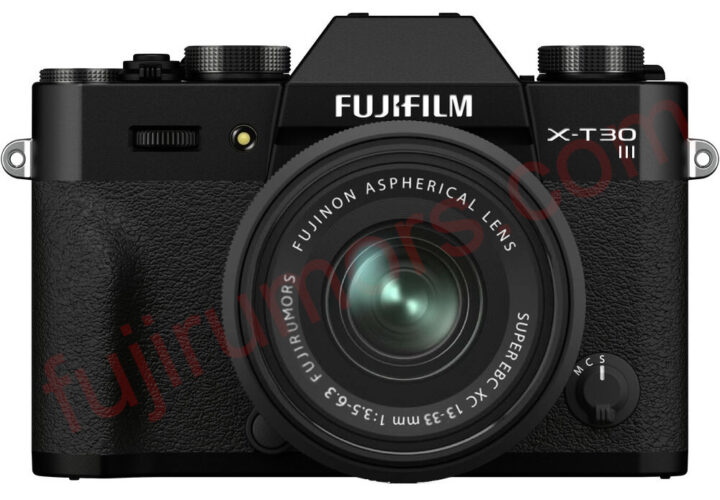
LEAKED: Fujinon XC13-33mmF3.5-6.3 Finally Fixes What (Most) Photographers Hated About the XC15-45

#

We told you Fujifilm will launch the Fujinon XC13-33mmF3.5-6.3 in 2025.

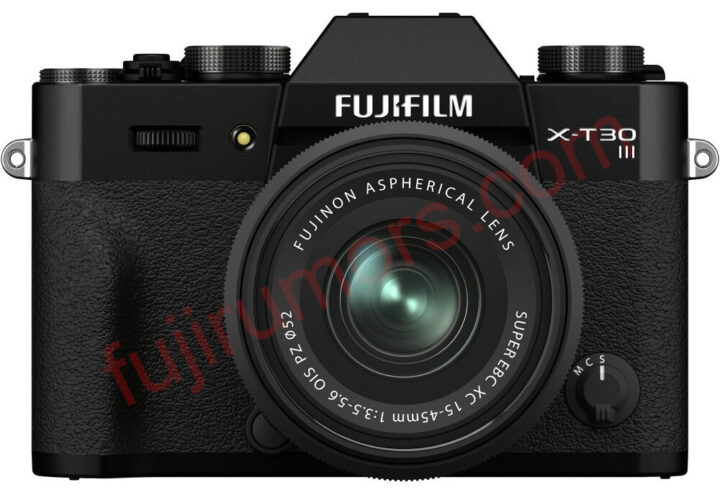
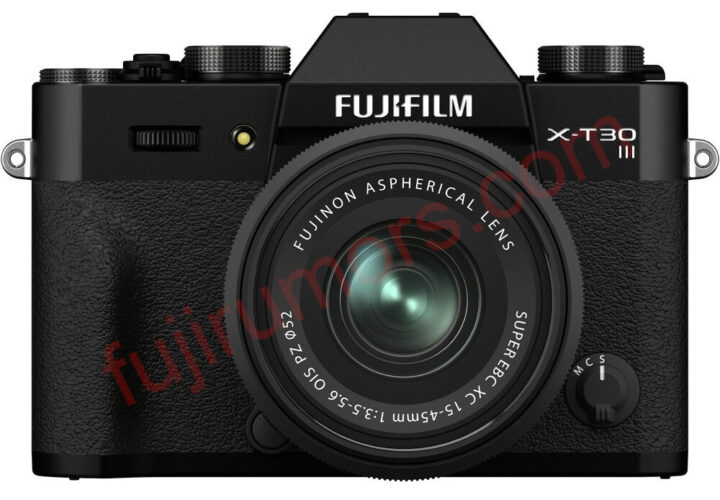
I don’t know if this is going to replace the Fujinon XC15-45mmF3.5-5.6 OIS PZ, but since it is coming in 2025, I would not be surprised if the Fujinon XC13-33mm would be the new kit lens for the upcoming Fujifilm X-T30 III.

With that said, was a new kit lens really needed?

Well, some might appreciate the wider end (13 instead of 15). But there is another difference that for me is even more important: the new Fujinon XC13-33mmF3.5-6.3 will get rid of the PZ (powerzoom) and have mechanical zoom.

For me this is a welcome change as I vastly prefer mechanical zooms. And if I read through the comments in the last few weeks, I have the impression that most of you also prefer it over the powerzoom.

The last powerzoom I owned was this one, but that is from the times before I went all-in with Fujifilm MILC and I was still trying to find the best mirrorless system for my needs. It was a fine lens, I certainly loved its compactness, but I never grew fond of the powerzoom function.

I’m glad to see that the XC13–33mmF3.5–6.3 features a mechanical zoom—this alone makes the lens feel much more practical and worthwhile to me.

But I am curious to read what you have to say about it in the comments.

Do you own the Fujinon XC15-45mmF3.5-5.6 OIS PZ. Do you love the powerzoom or did you often wish for a mechanical zoom on it?

Follow FujiRumors on PatreonFacebookInstagramRSS-feedYoutubeFlipboard and Twitter

Fujinon XC 13-33mm to Be Launched Along with Fujifilm X-T30 III

Little update regarding the rumored Fujinon XC13-33mmF3.5-6.3.

The lens will be offered also as a kit lens for the upcoming Fujifilm X-T30 III, hence they will be launched together this month.

I am not sure if it is basically going to replace this kit lens here, but it certainly sounds like that.

Follow FujiRumors on PatreonFacebookInstagramRSS-feedYoutubeFlipboard and Twitter

A Lovely Combo: Fujifilm X-T30 III Coming with 26MP Sensor and 5th Gen Processor

I always thought it might end up this way, but so far all I had were my own speculations.

But now we have sort of “confirmed”, because a trusted source told me that the Fujifilm X-T30 III will indeed use the 4th generation sensor in combination with the 5th generation processor.

I think that’s a great and efficient combo that has proved to work really well already on the Fujifilm X-S20. So I applaud this decision by Fujifilm, since not only the combo works great (faster sensor readout, less heat generation, etc), but it will also allow to keep the price of the camera lower (that 40MP sensor ain’t cheap).

Follow FujiRumors on PatreonFacebookInstagramRSS-feedYoutubeFlipboard and Twitter

Sorry, But the Fujifilm X-T6, X-Pro4, X-H3 (and Friends) Won’t Arrive in 2025

A few months ago, we estimated—based on Fujifilm’s historical sensor/processor refresh cycles—that the next sensor generation would likely arrive in late 2025 or early 2026.

To be clear, that wasn’t a rumor, just a data-driven speculation.

Following that article, some speculated that November 2025 could be the right moment, since Fujifilm has historically launched some of its most important cameras in that month (such as the X-T5).

But today I can confirm: the 6th generation platform will not be launched in 2025. So you can now rule out “late 2025” as a possibility.

That also means we won’t see the Fujifilm X-T6, X-Pro4 (or X-Pro5, X-Pro6), X-H3, X-H3S, X-T60, X-E6, X100VII, GFX100III, GFX100SIII, or GFX100RFII this year.

And yes, I know plenty of supposed “spec leaks” about these cameras are floating around—but they’re all fake, as we explained here.

Bottom line: it’s all AI-generated nonsense, stuffed with random specs. Every day there’s a new “upcoming” Fujifilm camera announcement.

Some of these videos gather tons of views and lots of comments, so I want to stress it once more: it’s fake.

And yes, I sometimes feel like a lonely Don Quixote, tilting at the windmills of fake rumors with little hope (illusion) of winning this battle. But what matters is staying true to yourself and bring excitement in the Fujifilm community only when it is real, verified, and worth celebrating. So I’ll leave the fake rumors to others. Shall they boost their traffic and make money by misleading people with all sorts of fake rumors. We’ll stay out of this game.

Anyway, the wait for the Fujifilm X-T6 and friends might be a bit longer than we’d like, but it’s much easier to stay patient when you’ve got the ultra-awesome Fujifilm X-E5 in your hands ;)

Follow FujiRumors on PatreonFacebookInstagramRSS-feedYoutubeFlipboard and Twitter

The Best Fujifilm Communities

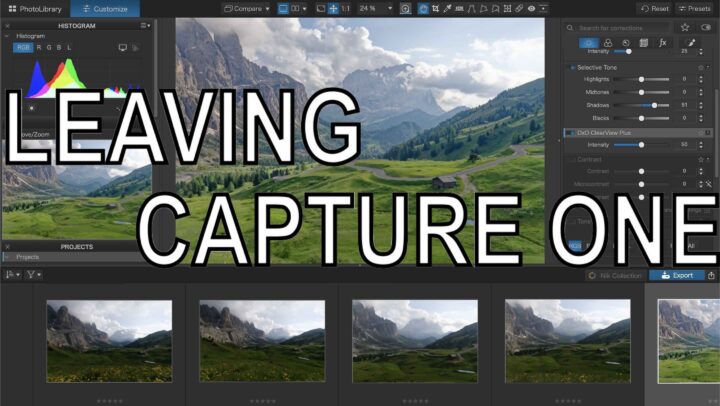
I’m Leaving Capture One for DxO PhotoLab 9: Here is Why!

In 2019 I wrote an article about leaving Lightroom for Capture One.

Well, here we are, six years later, and this time I’m announcing another change: I’ll be leaving Capture One for DxO PhotoLab 9.

First off, let me be clear: my time with Capture One has been excellent. It’s a fantastic piece of software, and I never once regretted switching from Lightroom. If you’re sticking with Capture One, you’re still making a solid choice.

Why am I leaving?

Before we start, it’s worth remembering that Capture One supports Fujifilm cameras because Fujifilm pays them to. That’s part of their original agreement. So if you’re happily editing your Fujifilm files in Capture One, thank Fujifilm, not Capture One. And that’s totally fine — just business as usual.

What really bothered me, though, was Capture One’s handling of the free Express version. They announced its removal, but in reality, they didn’t actually discontinue it for Fujifilm shooters — they simply hide and renamed it.

Instead of openly saying “Capture One Express is closing, but Fujifilm users still have access to a free basic version,” they didn’t tell us about it and made it complicated to find. The probable goal: push Express users into upgrading to the paid version. Luckily, on FujiRumors we figured out the not-so-intuitive way to still access the new “Fujifilm RAW Converter (FRC)” and shared it with the community.

Legally, it’s all fine. I assume (but that’s just a guess of mine) their contract with Fujifilm might oblige them to offer a free basic version, and if so, they would have technically respected that. But from a customer-relations point of view, it felt a bit disingenuous. A little transparency and clarity would have gone a long way.

The turning point

Now that I own the Fujifilm X-E5, I had to make a choice. As a perpetual license holder, I would need to pay Capture One full price just to get support for my new camera. At that point, I asked myself: do I double down on Capture One, or finally make the switch to something else?

And the answer was clear: it’s time for DxO.

Also consider: while Capture One won’t support the X-E5 in older standalone versions, DxO added X-E5 support also the PhotoLab 7 and 8.

So this makes me confident that if one day I’ll treat myself with a Fujifilm X-E6 or X-T7 or so, I guess I won’t be forced to pay the upgrade to DxO PhotoLab 10/11 to use its RAW files on DxO.

Why DxO?

Over the past two years, DxO has impressed me more and more. The new PhotoLab 9 is a powerful, feature-rich editor — with great tools like AI Masking. I’ll be pairing it with FilmPack 8, which unlocks all Fujifilm film simulation profiles.

On top of that, DxO PureRAW 5.3 now supports DeepPRIME XD3 for all X-Trans cameras, delivering outstanding noise reduction and detail retention.

So, from now on all my editing will be done with PhotoLab9.

What About You?

Since I’ve shared my own quick editing software journey, I’d love to hear yours. What software are you using now, and how did you get there? Feel free to share your story in the comments below.

The World Looks Better in Fujifilm Colors – You Don’t Believe Me? Then See for Yourself!

Gear Detox – a Waste of Time?

From time to time, we should be reminded that light, moment and inspiration matter more than megapixel, specs and AF speed.

I mean, I am the first to admit that I also enjoy talking about gear here on FujiRumors. It’s fun—there’s just no way around it. :)

But the words we speak here, the chats we have… I don’t print them big, frame them, and hang them on a wall. I don’t print and frame the spec sheet of the latest camera.

What I do print instead are the images I’m most happy with.

And that’s what this post is about—a little roundup of photographs shared by you, the Fujifilm community. It’s a chance to pause the gear talk for a moment and just enjoy what really matters: the images.

And look… I know. These image roundups don’t get many views. They take a ton of time to make. They don’t boost traffic. I guess that’s why no rumor sites make them.

But I decided—I don’t care.

I’ll do an image roundup now, and I’ll try to do more in the future. Because they matter to me. And maybe to a few of you, too.

In a world where others make up rumors in a vile attempt to grab your attention and profit from your good faith, we go the opposite way: we don’t share the endless stream of dubious and fake rumors we receive. Instead, we focus on what matters—enjoying photographs.

I might lose time. I might lose traffic. But I’ll be proud of this article… and of the amazing Fujifilm community that is capable of creating such wonderful images.

The Best Fujifilm Communities

Film Simulation Power

For today’s image roundup we take a look at images shared at our immense Fujifilm Film Simulation Group.

You’ll see the power of Fujifilm colors in action. Enjoy :).

_ _ _

by Emanuele

📸 Fujifilm x100VI
📍 Venezia, Italy
🎞️ Last Summer Roll

_ _ _

** CLICK HERE to Read the Rest of the Article **

RUMOR: Fujifilm X-T30 III Coming in October

The Fujifilm X-T30 III will be announced in October.

Follow FujiRumors on PatreonFacebookInstagramRSS-feedYoutubeFlipboard and Twitter

The Best Fujifilm Communities

The Hidden Advantage Nobody Talks About – FUJIFILM 26MP vs 40MP

You all know I’m a big fan of Fujifilm’s 40MP sensor. In fact, when I put together my Fujifilm X-E5 wishlist, I said I’d happily pay more if it came with the 40MP over the 26MP.

But let’s be fair: the 26MP sensor paired with the X Processor 5 – as found in cameras like the Fujifilm X-S20 – is a terrific combination with its own clear advantages.

Advantages of the 26MP Sensor

  • faster sensor readout → and all the benefits that come with it, such as less rolling shutter
  • less battery drain
  • more affordable

For a full breakdown, we’ve already written a comprehensive 26MP vs 40MP Pros & Cons article here.

Today, though, I’d like to highlight something interesting from two articles by Alik Griffin, where he compared files from his Fujifilm X100V (26MP) and X100VI (40MP).

At first glance, you’d assume the main reason to prefer the X100VI would be the higher resolution. But Alik points out something else entirely that makes the 40MP sensor shine. Something that is hardly ever talked about.

Alik noticed:

Resolution

  • on a tripod, the X100VI shows a clear detail boost over the X100V, even at higher apertures—enough to justify an upgrade for tripod work.

The Grain (and Why It Matters More Than You Think)

What really impressed Alik wasn’t just the resolution, but the character of the grain. Here are some of his observations:

  • the X100VI’s smaller, tighter grain is far nicer to work with than the older models
  • the slight resolution boost, combined with the finer grain and better overall fidelity, makes the upgrade worth it
  • nicer grain with cleaner skin tones and clearer colors
  • the X100VI preserves shadow detail better and avoids the color smearing
  • everything looks better—not only at ISO 6400, but even at lower ISOs
  • the X100VI’s grain has a better shape, making it easier to clean up with noise reduction
  • beyond the added detail, the tighter pixel pitch and improved grain deliver noticeably superior image fidelity

Alik has covered the comparison in full with lots of samples at his blog at alikgriffin here and here.

One more thing… there is this myth that more pixels are worst in low light. Top industry insiders and professionals disagree with this statement:

Follow FujiRumors on PatreonFacebookInstagramRSS-feedYoutubeFlipboard and Twitter

The Best Fujifilm Communities