Skip to content

DxO PhotoLab 9/PureRAW 5.3 Released: Unrivaled Noise Reduction for All X-Trans Files, AI Masking and More
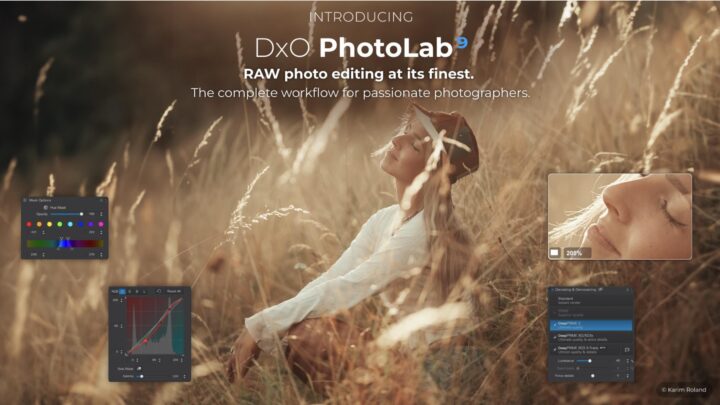
DxO has just launched DxO PhotoLab 9.

Now all X-Trans cameras can enjoy their most sophisticated DeepPRIME XD3 X-Trans technology.

But there is a lot more, such as AI Masking. All details at the dedicated DxO PhotoLab 9 page.

DxO PureRAW 5.3 is also available now.

The latest versions also add Fujifilm GFX100RF support.

Get DxO here:

New in PhotoLab 9

Al Mask: for advanced selections
Accelerate your editing with Al-driven subject detection and selection.

  • Automatically select key subjects such as sky, people, clothes, background, hair, vehicles, and more. You can also use click or bounding box to manually select your subject.
  • Al masks can be combined with all other masking tools for the most challenging needs

Refined Local Adjustments with vastly improved masking system
Enjoy greater flexibility and precision in localized edits with a unified and intuitive masking structure.

  • Combine all masking tools together (Al Mask, Control Points, Control Lines, Gradients, Brushes…).
  • Sub-masks let you create more precise masks for each image.
  • Easily access actions such as Invert Mask Effect and Duplicate Mask.
  • Gizmo displays have been redesigned for clarity and usability.
  • A one-time engine migration is required to edit local corrections created in earlier DxO PhotoLab versions.

Localized Noise Reduction and Lens Sharpness capabilities
Target specific areas for denoising and lens sharpness using masks.

  • With the Local Denoising and Local Lens Sharpness Optimization, it’s now easier than ever to fine-tune your most challenging images.

Images stacking in the Filmstrip
Organize your images more efficiently through stackable thumbnails.

  • Virtual copies are automatically grouped into collapsible stacks.
  • Manual controls include: create, group, ungroup, sort by date, and re-stack virtual copies.
  • Stack display states (collapsed/expanded) are preserved across filtering and project navigation.

Advanced Batch Renaming Tools
Rename images (inputs and outputs) consistently and efficiently using a flexible token-based system.

  • Leverage metadata tokens (e.g. EXIF, IPTC, shot date, counter) and custom text to build naming schemes.
  • Create, save, and reuse custom renaming presets.
  • A Find & Replace function is now available in the export dialog, with optional case sensitivity and live preview.

Support for Apple ProRAW and HEIF/HEIC Image Formats
PhotoLab 9 offers full compatibility with Apple ProRAW and HEIF/HEIC

  • ProRAW images from iPhones can now be opened and processed, with built-in tone mapping enabled by default.
  • HEIF/HEIC image formats are now fully supported.

Enhanced Noise Reduction with DeepPRIME 3 & DeepPRIME XD3 X-Trans

  • DeepPRIME 3, introduced in PhotoLab 8.5, takes our machine-learning based approach to RAW conversion one step further: our new neural network performs denoising, demosaicing and the correction of chromatic aberrations all simultaneously and with unprecedented efficiency.
  • DeepPRIME XD3 X-Trans follows the same approach but utilizes a significantly larger model and more training data. As a result, it retains eXtra Detail, while also delivering silky-smooth bokeh at the same time.
    After 6 months of public beta, PhotoLab 9 contains the final version, which is faster and produces cleaner images than the beta. The older DeepPRIME XD was removed.
  • The original PRIME denoising, revolutionary when introduced back in 2013, but now obsolete, was removed.
  • A live preview option allows you to visualize both global and local denoising effects at any zoom level.

Lens Sharpness Optimization V2
Experience enhanced image detail thanks to the latest improvements in DxO’s lens correction engine.

  • The calibration process and the sharpening algorithm were reworked from the ground up to ensure homogenous results across all camera gear and shooting conditions (feature will roll out progressively).
  • The intensity slider now runs from 0 to 200, with 100 being our recommendation of “just the right” amount of sharpening for the given image.

Quick Access with Favorites

Add folders, projects, or drives to your favorites for quick access. This makes navigating to your most-used destinations faster and more efficient.

U Point feathering control

Diffusion slider has been added to fine tune your masks using U Points.

Projects accessible in Customize tab

In this version you can access your Projects directly from the “Customize” tab. With this improvement, managing and switching between Projects is easier than ever, streamlining your entire workflow.

Known Limitations

  • Bayer RAW files are not supported yet by DeepPRIME XD3 (X-Trans only).
  • HEIF/HEIC SUPPORT
  • Lightroom IPTC tag not read
  • GPS coordinates are displayed as 0 in Samsung HEIC image
  • On MacOS 15.6 and Tahoe beta 6, predefined Al masks are not returning any result in GPU/ANE modes.
    Current workarounds are to switch to CPU mode or to use MacOS 15.5 or earlier.
PhotLab 9 Press Release

** CLICK HERE to Read the Rest of the Article **

Why This Guy Shoots ISO 500 Most of the Time — And Says You Should Too (If You Shoot Fujifilm)


 go to minute 10:28 of the video for the part where the useful feature to reduce editing is covered – includes sample images

Down below there are a few YouTube videos covering the DR expansion features on Fujifilm cameras.

In the first video, the guy straight out recommends you to shoot ISO 500 most of the time, which unlocks the DR400 feature.

In short: Fujifilm offers a few options to expand dynamic range:

  • DR200/DR400
  • DR Priority
  • HDR

They all work a bit differently and if you want to know all the details (as well as tips and tricks on how to make the best out of them), I can highly recommend Rico Pfirstinger’s excellent Fujifilm books.

I personally use DR200/DR400 most to get the most JPEG dynamic range in-camera which is perfect for travel or family shots where I don’t want to spend hours editing later.

Of course this requires me to shoot often at ISO 250 (DR200) or ISO 500 (DR400), but noise at those levels is negligible.

Also, I feel that with every sensor generation, Fujifilm has improved on how DR200/DR400 files look like (more natural) and with the 40MP sensor the results are the best so far.

Overall, the combination of Fujifilm film simulations, DR200/400 (and another feature that I might touch on in another article), are a game changer for me as far as reducing editing time on the computer.

Just to be clear: I still—and always will—shoot JPEG+RAW. As much as I trust the in-camera results for most of my needs, there are always a few images I might want to print. And for those, I like having the RAW backup, in case I need the full flexibility of a RAW converter to handle a particularly challenging shot.

Finally, as a reference, here are the minimum ISO requirements for the DR-function on different X-Trans sensors:

DR on 40MP (X-T5 & Co)
DR200 is available at sensitivities starting from ISO 250 and above
DR400 is available at sensitivities starting from ISO 500 and above

DR on 26MP (X-S20 & Co)
DR200 is available at sensitivities starting from ISO 320 and above
DR400 is available at sensitivities starting from ISO 640 and above

DR on 24MP (X-E3 and Co)
DR200 is available at sensitivities starting from ISO 400 and above
DR400 is available at sensitivities starting from ISO 800 and above

The Videos

Fujifilm X-T30 III – More Than Just a Name Change?

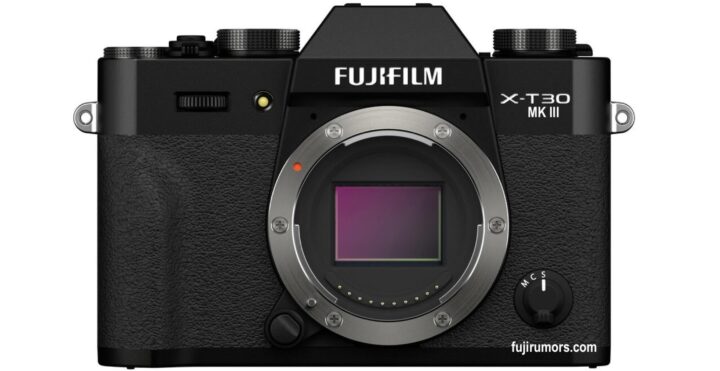
So, we told you that the Fujifilm X-T30 II successor won’t be called Fujifilm X-T40, but Fujifilm X-T30 III.

And this made some panic. So let’s talk about it.

At a first glance this might seem like a very negligible detail, but let’s try to understand why Fujifilm picked X-T30III over X-T40 or X-T300.

Take a look at the Fujifilm X-T30 vs X-T30II specs comparison.

You will notice that the specs are identical, except for one minor detail: the X-T30II has a better LCD screen.

So, at least with the jump from X-T30 to X-T30II, the “MKII” indicated a negligible specs bump.

Now, some feared that following the same scheme, also the jump from X-T30II to X-T30III will mean a negligible specs boost. But I don’t think that will be the case.

You see, the X-T30II was born during the global parts shortage caused by COVID. To keep production of the X-T30 running at a steady pace, Fujifilm had to adapt and use whatever components were available—in this case, a higher-resolution LCD. That small change was enough for Fujifilm to rebrand the camera as the X-T30II.

In short: it was just a name change… and I think this won’t be the case this time.

You see, unlike the X-T30II, the upcoming Fujifilm X-T30III isn’t the result of a parts shortage. It emerges from a clear need Fujifilm has identified: a more affordable, lower-tier model that still offers an electronic viewfinder.

That’s why I believe this time the upgrade will be more significant. Most of all, I expect it to feature Fujifilm’s 5th-generation processor, the latest firmware, and an overall boost in specifications—all driven by these two key improvements.

But since price matters, Fujifilm could choose to save costs in other areas—for example, by keeping the X-T30II’s exact same body, with no design changes like those seen on the X-T50. The trade-off? No IBIS.

But that’s all just speculation.

What’s sure is that it will be called Fujifilm X-T30 III and it will be launched in 2025.

Follow FujiRumors on PatreonFacebookInstagramRSS-feedYoutubeFlipboard and Twitter

The Fun Fujifilm X-E5 Exceeds Expectations — And Real-World Use Crushes EVF Complaints

One of the huge critics to the Fujifilm X-E5 was the LCD screen that, at least on paper, did sound disappointing and made some people outrageously upset.

Well, that was at least until we found out that the on paper superior LCD screen of the Sony A7CR is actually worst than the on paper weaker screen of the Fujifilm X-E5, for the reasons we reported here.

Another spec on paper that triggered anger among the community was the EVF, which is the one of the Fujifilm X-T50 but many got mad about it not being bigger and having a higher resolution.

Well, that’s the same concern that Rumle Skafte had (first video below), as he wears glasses and uses the EVF 99% of the time, especially when he works in theater.

So, how did the EVF perform?

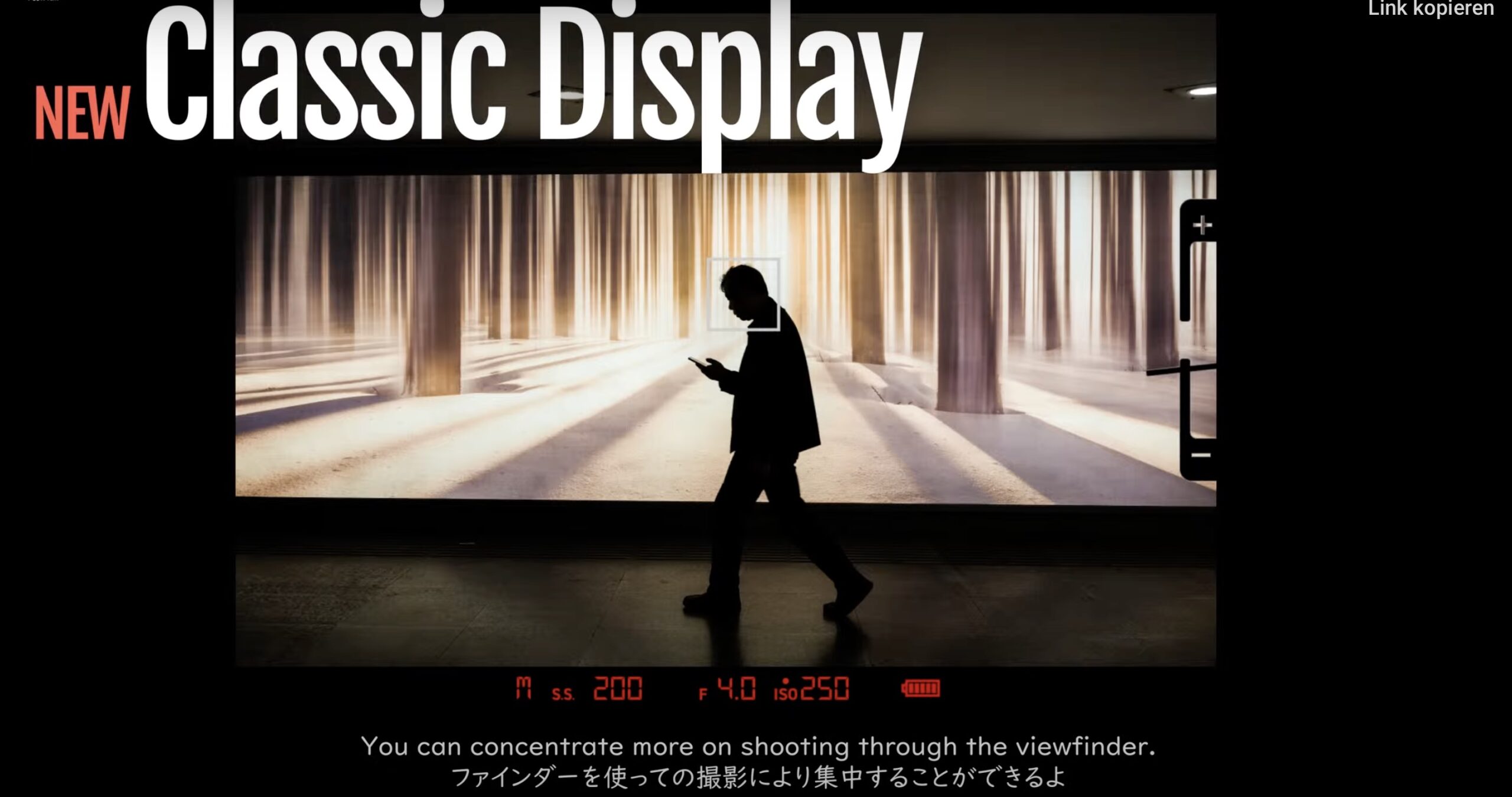
Not only he had no issue with it even wearing glasses, but he even loved some aspects of it, namely the new classic display mode (an instant favorite).

You can read the summary of his video and watch his creatively edited video below.

And there will be more reviews below.

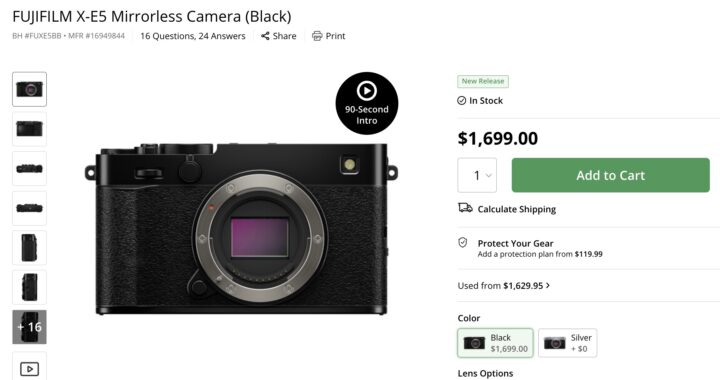
X-E5 In Stock in at:

STOCK CHECK

Fujifilm X-E5 Reviews

** CLICK HERE to Read the Rest of the Article **

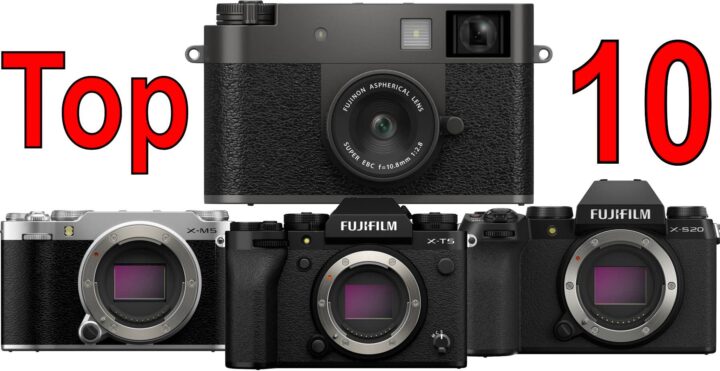
Fujifilm Dominates Japan’s MAP Ranking: X Half Leads Again, 4 Fujifilm Models in Top 10

For the second month in a row the Fujifilm X half is on top of the MAP camera ranking in Japan. And that, by a very large margin on the second placed camera.

Overall, out of the top 10, four cameras are coming from Fujifilm.

  1. Fujifilm X half
  2. Sony A7C II
  3. Nikon Z5II
  4. Ricoh GR IIIx
  5. Fujifilm X-M5
  6. Fujifilm X-S20
  7. OM System OM-5 Mark II
  8. Sony A7IV
  9. Canon EOS R6 Mark II
  10. Fujifilm X-T5
  11. Nikon Z50II

via Map Camera

VOTE – Which Fujifilm X Camera do You Own? – Measuring the Success (or not) of Fujifilm X-E5

It’s been over two years now when I last asked you which Fujifilm X series cameras you own.

Since then, we had plenty of new cameras an the Fujifilm X-E5 is hitting the market in these days.

So I thought it would be nice to see what has changed in these last few years.

Are fifth generation cameras now more popular than they were 2 years ago?

And especially, how successful was the Fujifilm X-E5 at least among the FujiRumors community?

IMPORTANT NOTE: if you pre-ordered the Fujifilm X-E5 (and it has not shipped yet) you qualify as an “owner” and can drop your vote in favor of the X-E5.

Which X Camera do you Own? (NOTE: Pre-Ordered Gear Qualifies as "OWNER")

View Results

Loading ... Loading ...

Fujifilm X-T40/X-T30III: Finally Closing the Gap?

go to minute 5:53 of the video to hear the thoughts of Patrick about it

One of the critiques Fujifilm gets is that they have a confusing camera lineup with too many lines.

The Fujifilm X-T30III or X-T40 just fueled again this criticism, but I think this time they don’t deserve it.

First things first: Fujifilm has indeed likely canceled 6 X series lines already (or even 7, if we consider X70 and XF10 not part of the same line):

So we have a total of possibly six canceled lines.

And how many lines has Fujifilm introduced?

Well, 2 new lines have been introduced recently: Fujifilm X half and the Fujifilm X-T50,

Yes, also the Fujifilm X-T50 is a “new line”, because as we told you in this rumor, it does not belong to the X-T10, X-T20, X-T30 line since Fujifilm will launch a dedicated successor for that line (X-T40/X-T30III) in 2025.

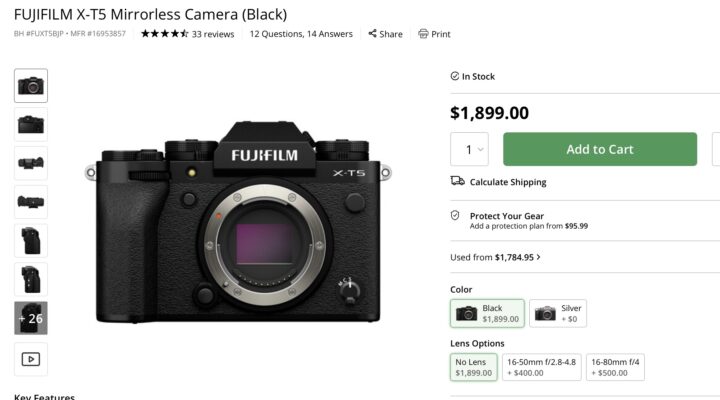
And actually there will also be a third totally new line soon, and that camera is already listed at BHphoto here.

In short: Fujifilm has axed more lines than it has created new ones.

With all that said, I think launching the Fujifilm X-T40/X-T30III makes totally sense.

Why?

Well, because Fujifilm’s entry level line has basically been axed (except X-M line) and their other lower-end to mid-range models got an overall specs upgrade with a consequantial significant price increase (X-E5 and X-T50).

At this point in time, Fujifilm has no true entry level camera with viewfinder and that’s a problem if you ask me.

But how could a Fujifilm X-T30III/X-T40 look like?

Speculations (NOT RUMOR)

  • my realistic scenario: X-T30 II body with 5th generation processor and latest firmware
  • my hope scenario: X-T30 II body but with X-T100 alike unique screen mechanism – we reported here
  • my dream scenario: X-T50 body with 4th generation 26MP sensor

Since I think that price matters when it comes to the Fujifilm X-T40 or X-T30 III, I believe they’ll go for the first scenario I mentioned above.

But feel free to let us know in the comments what you think about all of this.

Fujifilm X and GFX Sales Surge in Q1/2025 — Now Close to “Goldmine” Instax Revenue

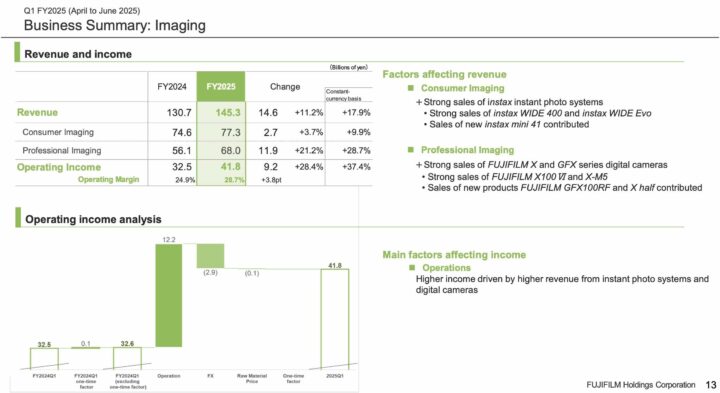
The latest Fujifilm financial results are out (Q1/2025 – April to June 2025).

Interestingly, Fujifilm makes an estimate of the impact of U.S. tariffs for each segment, except for the imaging division

  • health care = – 4.0 billion yen
  • electronics = – 1.0 billion yen
  • business innovation = – 1.0 billion yen
  • imaging = no information

A positive mention (strong sales) goes to the Fujifilm X100VI, Fujifilm X-T50, Fujifilm GFX100SII and Fujifilm X-M5 and as far as Fujifilm GFX100RF and X half goes, they just say they “contributed” to the results. In the Instax world sales were strong for instax WIDE 400 and instax WIDE Evo.

Also interesting: professional imaging (mainly X and GFX) is growing much stronger than consumer imaging (mainly Instax).

In the latest report, consumer imaging sales (mainly Instax) reached ¥77.3 billion, while professional imaging sales (mainly X and GFX) brought in ¥68 billion.

It’s quite astonishing that X/GFX sales are now making Fujifilm almost as much money as Instax sales, which the Fujifilm CEO called their new goldmine. I guess that’s a promising trend for our beloved X/GFX series.

In short:

  • Strong demand for instant photo systems and digital cameras drove revenue by 11.2% year-over-year to JPY145.3 billion and operating income surged by 28.4% year-over-year to JPY41.8 billion.
  • In the Consumer Imaging business, consistent demand for instax™ instant photo systems contributed to higher revenue.
  • In the Professional Imaging business, revenue growth was supported by the strong performance of the X Series and GFX Series cameras.

Fujifilm’s imaging forecast remains the same as the one issued in May 2025, with no updates in the latest report.

Fujifilm Announces Financial Results for the First Quarter Ended June 30, 2025

** CLICK HERE to Read the Rest of the Article **

Last-Second Fujifilm Best Sellers – Before Prices Go Up in 2 Days (in USA)

A few days ago, we informed you that Fujifilm will raise prices on almost all X and GFX gear, and we also shared the full list of upcoming prices here.

I’ve now checked on what’s been selling best through FujiRumors affiliate links—and here’s the current top-selling gear, just two days before the price hike takes effect.

If there’s anything you’ve been thinking about getting, now’s the time to grab it at the current lower price.

NOTE: All the price increases listed below apply – obviously – only to the U.S. market. That’s why I’m sharing prices in U.S. dollars only—not in euros, yen, or any other currency. Will other regions see increases too? I don’t know. I have no info so far. My guess (not rumor) is that so far price increases are planed only for USA.

  1. Fujifilm X-T5
    BHphoto / Amazon / Adorama / Moment / BestBuy / Paul’s Photo
  2. XF70-300mmF4-5.6 R LM OIS WR
    BHphoto / AmazonUS / Adorama / Focuscamera / Moment / Paul’s Photo
  3. NP-W235
    BHphoto / Amazon / Adorama / Moment
  4. XF18mmF1.4 R LM WR
    BHphoto / AmazonUS / Adorama / Focuscamera / Paul’s Photo
  5. X-S20 body
    BHphoto / Amazon / Adorama / Moment / BestBuy / Paul’s Photo
  6. XF16-55mmF2.8 R LM WR II
    BHphoto / AmazonUS / Adorama / Moment / Nuzira / Paul’s Photo
  7. NP-W126S
    BHphoto / Amazon / Adorama / Moment

Of course the list is heavily influenced by the disastrous stock situation with Fujifilm gear – availability is tight, and many people are simply snapping up whatever they can still find in stock. For example, I bet that if the X100VI would be available anywhere, it would be on top of the list.