Skip to content

TTArtisan Fujifilm X/GFX Lens Roadmap with Autofocus Lenses for Fujifilm, 23mmF1.4 FX, 90mmF1.25 GFX and 40mmF2.8 FX

TTArtisan informed me that they plan the following lenses for Fujifilm to come next:

  1. September: APS-C 40mm f2.8 macro lens with Sony/Fuji/Canon/M43/Z/L mount.
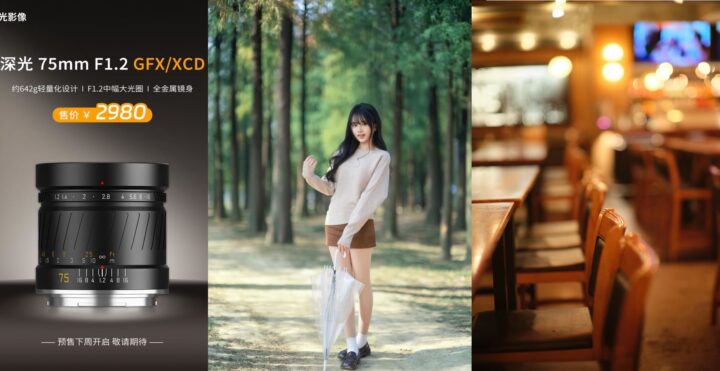
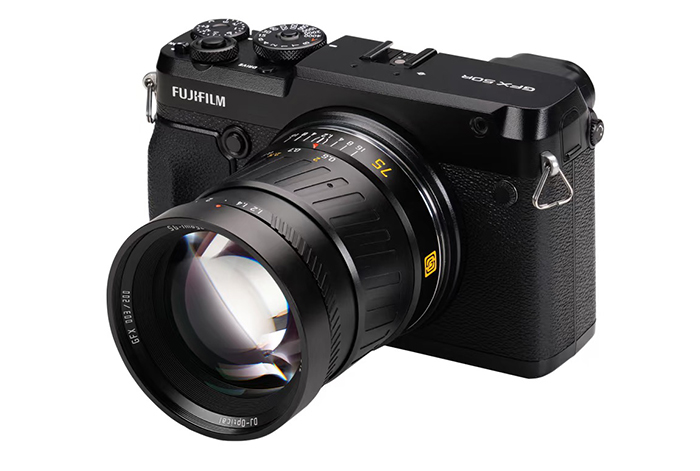
  2. September: 90mm f1.25 lens with Sony E/Fuji GFX mount.
  3. October: APS-C 23mm f1.4 lens with Sony/Fuji/Canon/M43 mount.
  4. November/December: 28mm f5.6 lens with Leica M mount.
  5. Future: Autofocus lens for FUJI

As this information has been passed to me directly from TTartisan (whom we are affiliated with), don’t take it as a rumor, but as a news.

The Fastest Growing Fujifilm Group

Follow FujiRumors on Patreon, Facebook, Instagram, RSS-feed, Youtube, Flipboard and Twitter

Join Our Owners Groups

Join Our Facebook Pages

Sony Tricked You: The Sony A7V Does Not Match the Fujifilm GFX100II in Dynamic Range – UPDATED

The Sony Trick

UPDATES: Bill Claff made an error an apologised. Here are the true results and findings

Original Article:

Photons to Photos has published their dynamic range measurements for the Sony A7V.

As soon as the chart dropped, several Fujifilm GFX shooters in our group started wondering: is it time to ditch the GFX100 series and move to Sony?

Why the sudden doubt?

Because at low ISO values, the Sony A7V appears to match the Fujifilm GFX100II in dynamic range — at least according to the Photons to Photos graph here.

But there’s a trick. 😉

As Bill Claff (the mind behind Photons to Photos) explained over on DPReview here:

Note the triangles point down which indicated Noise Reduction (NR) baked into the raw files.

Also note, no Dual Conversion Gain (DCG) was detected.

Noise Reduction (NR) makes comparisons less reliable. Unfortunately it’s hard to gauge how much of an impact NR has on the results. Note there’s even stronger NR at the very high ISO settings.

That’s why the GFX100II shows simple dots, while the Sony A7V shows downward arrows: those arrows are a warning that NR is being applied to Sony’s RAW data — meaning the “true,” NR-free performance would be worse.

The real question now becomes: how strong is Sony’s NR, and how would the A7V fare against a GFX100II if both had the same amount of noise reduction?

Also a pity there is no dual gain conversion on the Sony A7V, because that helps to improve ISO performance at higher ISO. All modern (and even older) Fujifilm cameras have dual gain. This explains why the GFX100II jumps ahead to the Sony A7V at some point – even if the Sony is agressive with noise reduction – because dual gain kicks in on the GFX100II.

UPDATE: Bill Claff says “There will be ES results shortly at PhotonsToPhotos.net. And it does look like there’s High Conversion Gain (HCG) at ISO 1000 that is obscured by the NR with Mechanical shutter.”

The Fuji Trick

And because here on FujiRumors we take pride in being 100% honest and bias-free, let’s remember something before anyone starts yelling “SONY IS CHEATING!”

Fujifilm has played its own tricks, too.

With the Fujifilm X-Pro3, Fujifilm used a different method to make the camera appear to have better dynamic range than it actually did. And yes — we called it out immediately when the results came out.

So… hopefully this little reminder will help prevent the incoming sh*tstorm from Sony fanboys in the comments. 😉

The Best Deal on the Best Dynamic Range

** CLICK HERE to Read the Rest of the Article **

The Spectacular Fujinon GF32-64mmF4 is Now $500 Off plus New Unofficial XF Lens Deals

The Unofficial Fujifilm XF Lens Deal

Earlier today we reported that mainly BHphoto (but in some cases also Amazon and Adorama) offer unofficial Fujifilm deals.

Unofficial because they are not part of the official Fujiilm X deals (full list below), and hence we don’t know how long they will last.

The New Official GF Lens Deal

Fujifilm just added the spectacular Fujinon GF32-64mm F4 lens to the list of their officially rebate GF lenses.

And I don’t call the GF32-64mm “spectacular” just randomly.

I actually own it, took tons of images with it, and it’s out of this world in terms of image quality and flexibility.

For example, it was the only lens I used on my multi-day Dolomites hiking trip… and you can also see me in action with it on this Dolomite video.

And guess what? After I published an image I took with it, the SonyAlphaRumors guy wrote me asking how I edited the colors in that image, because he loved them so much. It was an easy answer, as I just said “I did not edit at all… it’s Astia out of the box“. I guess that’s something hard to comprehend if you are not a Fujifilm shooter ;).

Official GFX Gear Deals

* freebies at BHphoto include a free CFexpress Type B Card and a camera bag

XF Lens and X Camera Deals

Unofficial XF Lens Deals

Official XF Lens Deals

Official X Camera Deals

Boryoza GFX-XCD Adapter Coming Soon – But The Fundamental Problem Remains

Boryoza is working on the Fujinon GF to Hasselblad XCD adapter.

It should come out in the first months fo 2026.

With this adapter, you’ll be able to use Fujinon GF lenses on Hasselblad XCD mount cameras (for example the Hasselblad X2D II).

Of course you’ll still have the one main problem that makes every Hasselblad X-D camera not an ideal choice for adapting third party lenses: since it does not have a mechanical shutter, you’ll only be able to use it with electronic shutter.

That’s a problem you don’t have in the GFX world, because it has a mechanical shutter and it’s actually a fantastic camera to work with adapted lenses. In fact, in our Fujifilm GX group there is so much awesome work shared that is done with adapted third party lenses.

Boryoza Adapters:

The GFX Shockwave: How Fujifilm Is Breaking the Full-Frame Narrative

GFX Rise

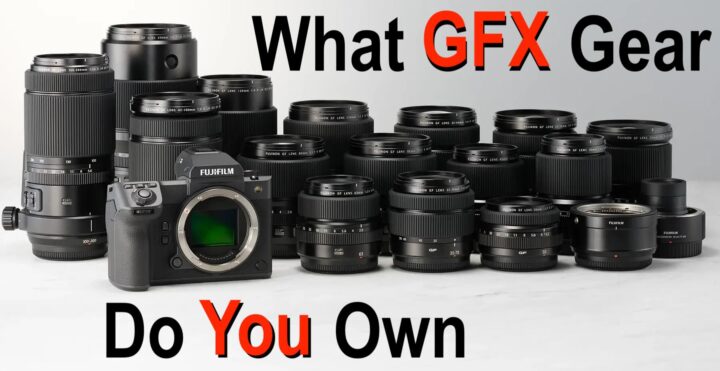
As we have seen, the GFX system is steadily growing. So I guess it’s time to dedicate it an image roundup.

But before we share the images (scroll to the bottom to enjoy them), I have a few thoughts to share.

A Peaceful Post

And look, guys. It’s holiday time, Christmas is near and the last thing I want is that we jump on each other and fight in the comments about little things.

That’s why I don’t want to publish anything controversial that could trigger hate in our hearts, divergent opinions in the comments and a good dose of sh*tstorm towards my humble person.

So I thought: what could a super-peaceful topic be? One we all agree upon?

And well, I found it after once again I read a comment that pops up regularly in the comments and on forums: Fujifilm’s marketing is contradicting, as they initially said sensor size does not matter, but then released the GFX.

Now that should be a non-controversial and peace-triggering discussion, right?

So let me share my point of view, which of course is not an opinion, but an irrefutable truth nobody shall dare to question!*
*I am kidding, guys

Full Frame’s Contradiction?

Fujifilm always said it: sensor size is not everything.

In fact, smaller sensors have a series of advantages, from speed, size, price and more, which we have listed here. And also in terms of computational photography the smaller the sensor, the easier you can make its magic work. So a smaller sensor might be even more future proof from this point of view.

But that’s just BS according to Sony, Canon and Nikon, who neglect their APS-C lineup and delivered the opposite message: a bigger sensor is always better.

And look, this narrative was fine…

… until the Fujifilm GFX came along.

Suddenly there was a camera on the market, with a sensor 70% bigger… of fuller… than full frame and in some cases even smaller bodies than some full frame cameras.

At this point the full frame mantra “a bigger sensor is always better” was no longer a proper marketing or forum phrase, as this would implicitly mean that full frame shooters could level up their game and get 70% better “Image quality” (whatever that means) by using the Fujifilm GFX system.

So the new full frame narrative became: sensor size is not everything. Smaller sensors have advantages in terms of speed, size, price and more.

That’s correct, but does it sound familiar?

You got it, that’s exactly what Fujifilm said right from the beginning: sensor size is not everything. Finally also the Full Frame world got this message.

Look, everything is a compromise, a balance, a matter of choices and priorities. And there is no “best” system. Sensor size is just one of the many aspects to take into account when choosing your system.

Fujifilm’s Contradiction?

So we established it by now: many Full Frame supporters contradicted themselves by first saying that a bigger sensor size is always better and then adopting Fujifilm’s point of view that a bigger sensor is actually not always better.

But did Fujifilm contradict itself too?

Because if sensor size is not everything, why even bother launching the GFX system?

Well, I see no contradiction, and here is why.

First off: when launching a second system, Fujifilm did not look at the market as a whole, but at their own offering. And from their point of view, precisely because sensor size is not everything, the difference between APS-C and Full Frame was not enough to justify an additional FF system.

Add to that the plethora of advantages that X-Trans offers (less color noise, less moire, more pleasing film-like grain and more), and going Full Frame made even less sense.

And yes, some trashtalked X-Trans for having some flaws, but we debunked those a long time ago with hardcore facts.

So, for Fujifilm, the combination APS-C and X-Trans was the way to go.

But Fujifilm also realized one thing: there are photographers out there, who can make compromises on many things, but not on image quality – and here is where the Fujifilm GFX system comes in.

If you are anyway willing to compromise on image quality for other benefits (smaller size, more affordable, faster sensor readout, etc), then APS-C is probably the sweetspot (as DPReview, Petapixel and other claimed here).

But if you are not willing to sacrifice on image quality (without breaking your bank account) then Fujifilm GFX is the way to go: it will give you the best image quality possible at a reasonable price.

Yes, you are going to spend more money, you will have bigger lenses, the sensor readout will be slower and what not. But if you can accept those compromises, you’ll be rewarded with the best image quality you can find on the market in a still portable (I talk out of experience) and fairly priced package.

So, there is no contradiction: for Fujifilm it just made sense to offer APS-C for those, who want a balanced system and GFX for those who can’t compromise in image quality. It’s consistent and logical.

I am not here saying this was the right choice. Only time will tell. But it’s a choice I understand from Fujifilm’s point of view.

Enough Talk

And now to the true point of this article: the images!

I went through the work shared at our Fujifilm GFX group and selected some images.

This is just a little taste of what the GFX system can do for you ;).

Esteban Gil – shared here
GFX100 You shouldn’t use non native lenses on the GFX.
My cheap laowa 17mm: Hold my beer
Magbox+AD300

_ _ _

** CLICK HERE to Read the Rest of the Article **

Fujifilm Camera Ownership Ranking: GFX Increases and the Real Ranking of Sony, Canon, and Nikon among FR-readers

The Ranking Results

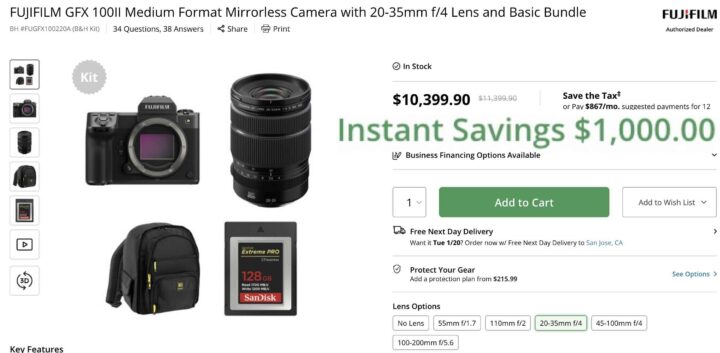
The Top Deal – save $1,000 + Free CFexpress Type B card and Camera Bag

4.5 years ago I launched a survey on FujiRumors here, asking which camera system you own.

And since that was such a long time ago, I decided to launch a new survey again recently.

So what has changed in these 5 years?

Let’s check it the survey results first:

2021: I own Fujifilm X APS-C system only (58%)
2025: I own Fujifilm X APS-C system only (52%)

2021: I own Fujfilm X APS-C system + other systems (Sony, Canon etc.) (25%)
2025: I own Fujfilm X APS-C system + other systems (Sony, Canon etc.) (25%)

2021: I own both, the Fujifilm X and the GFX system (6%)
2025: I own both, the Fujifilm X and the GFX system (8%)

2021: I don’t own any Fujifilm Camera (4%)
2025: I don’t own any Fujifilm Camera (4%)

2021: I own Fujifilm GFX MF system + other systems (Sony, Canon etc.) (3%)
2025: I own Fujifilm GFX MF system + other systems (Sony, Canon etc.) (3%)

2021: I own Fujifilm X, Fujifilm GFX + other systems (Sony, Canon, etc) (2%)
2025: I own Fujifilm X, Fujifilm GFX + other systems (Sony, Canon, etc) (5%)

2021: I own Fujifilm GFX MF system only (2%)
2025: I own Fujifilm GFX MF system only (3%)

Ups and Downs

(-) The number of Fujifilm APS-C only shooters only has decreased by 6%.

(+) We see a 2% increase in GFX + Fujifilm X shooters (now 8%).

(+) There is a 3% increase in GFX + Fujifilm X + other brands shooters (now 5%).

(+) And finally a 1% increase in Fujifilm GFX only shooters (now 3%)

Same Same

(=) 25% still own Fujifilm APS-C + other systems

(=) 4% of people reading this blog do not own any Fujifilm camera yet

(=) 3% of people shoot Fujifilm GFX + other systems

Summary:

In 2021, 91% of readers owned a Fujifilm X series camera
In 2025, 90% of readers own a Fujifilm X series camera (-1%)

In 2021, 13% of readers owned a Fujifilm GFX camera
In 2025, 19% of readers own a Fujifilm GFX camera (+6%)

In 2021, 30% of Fujifilm X/GFX shooters also owned another system
In 2025, 33% of Fujifilm X/GFX shooters also own another system (+3%)

The number of people not owning a Fujifilm camera is stable at 4%.

Conclusions:

The Fujifilm X system remains the dominant choice among FujiRumors readers, with APS-C ownership barely shifting over the past 4.5 years (from 91% to 90%). What has changed is how people build their kits around it. Fewer photographers are sticking exclusively to APS-C, while more are expanding into GFX or mixing Fujifilm with other brands.

GFX shows the strongest momentum: its ownership has grown from 13% to 19%, driven both by X shooters adding medium format to their setup and by a small rise in GFX-only users. Multi-system ownership is also up, with 33% of Fujifilm shooters now pairing their Fuji gear with other brands.

Despite these shifts, the share of readers who don’t own any Fujifilm camera at all remains unchanged at 4%.

In short: the X system is still the backbone of the community, but GFX and multi-system hybrid setups are steadily on the rise, with GFX experiencing the biggest rise.

What This Means:

A 1% drop in Fujifilm APS-C ownership is negligible. Especially considering that if rumor sites covering other brands would launch the same survey, they’d probably see a sensible increase in Fujifilm owners (for example, Canon, Sony and Nikon shooters adding a Fujifilm X100VI to their camera gear setup).

But when it comes to FujiRumors readers, there are 6% less people shooting only with APS-C (from 58% to 52%), with most adding the GFX to their personal linuep.

And yet, despite more photographers expanding their kits with other systems, the majority remain loyal to their Fujiflim APS-C cameras with only a -1% drop. That probably indicates that no matter if they buy an additional Full Frame or Medium Format system, they still value the advantages of owning a Fujifilm APS-C system.

At the same time the rise of Fujifilm GFX is slow but steady. And quite frankly, the GFX system would explode and reach immense numbers overnight, if only Fujifilm would make this GFX camera, which Fujifilm has already shown us in its mock-up version. But we got the Fujifilm GFX Eterna 55 instead… oh well…

Last but not least, only an additional 3% of FR-readers are “flirting” with other systems and have added a non-Fujifilm system to their lineup (30% in 2021 and now 33%).

🇺🇸 Fujiflm USA Deals – Save Up to $1,000 on GFX and X Gear 🇺🇸

Note: similar deals are currently running in Europe.

The Top Deal – save $1,000 + Free CFexpress Type B card and Camera Bag

X Cameras

X Lenses

GFX Gear

* freebies at BHphoto include a free CFexpress Type B Card and a camera bag

Instax Gear

Fujifilm X-T6 Truth Unveiled :: X-Pro4 Wishes :: The First Official Fujifilm Camera Recipe :: GFX100RF Fragment Edition and More – Top 10 November

Mega Deal

Top 10

  1. Fujifilm X-T6 — It’s Time to Tell You When It’s Coming
  2. Fujifilm X-Pro4 – Time to Remove the OVF, or the EVF… and Everything in Between
  3. Fujifilm GFX100RF Fragment Edition Announced
  4. WARNING: The Fujifilm X-T5 Struggles Badly With Wildlife Photography – A Real World Proof
  5. Meet FRGMT BW – Fujifilm’s First ‘Official’ Film Simulation Recipe
  6. Fujifilm Showcases a “Lensless Camera” Prototype
  7. Fujifilm Issues an Official (and Long Overdue) Apology :)
  8. Fujifilm X-T6 Coming Second Half 2026 – And What About X-Pro4, X-H3/S, X-T60, X-S30 and Rest of 6th-Gen Wave?
  9. This Chart Shows You the Full List of Fujinon XF/XC and Third Party X Mount Autofocus Lenses
  10. Top 10 Fun – and Affordable – Lenses for the Fujifilm X Mount

New Film Simulation Recipes

**** IMPORTANT ****

FujiRumors Favorites

Let Fujifilm Know

Fujifilm GFX100RF Wide Conversion Lens Option

Recently, I wrote an article about yet another WCL and TCL conversion lens set coming to the X100 system—this time from Viltrox. In that piece, I also expressed my hope that someone would finally create conversion lenses for the Fujifilm GFX100RF as well.

Well, while we don’t have any conversion lens specifically designed for the GFX100RF, it looks like the Ricoh GW-4 wide conversion lens actually works fine also on the Fujifilm GFX100RF.

I have found a video about it and also a blog post, you can find both of them below.

Summary of the video:

  • The Ricoh GW-4 wide-angle converter delivers surprisingly high image quality on the GFX100RF.
  • Sharpness remains strong, both in the center and corners, even with 100MP files.
  • Contrast stays consistent with the native lens; no noticeable loss in micro-contrast.
  • Minimal corner softness at typical landscape apertures (f/11–f/16).
  • Distortion is very low for a wide-angle converter and easily corrected when visible.
  • Flare control is good — lamps and bright light sources show no major artifacts.
  • Vignetting is minor and natural-looking, often negligible in real use.
  • Overall: delivers a clean, wide 21mm-equivalent image without the usual compromises of cheap add-on lenses.

Get Yours

Fujifilm GFX100 II in CLOSEOUT at Adorama and Massive $1,000+ GFX100II Bundle Price Drop at BHphoto – UPDATED

UPDATE: Adorama briefly marked the Fujifilm GFX100 II as a “closeout” product (see screenshot above), which prompted speculation about an upcoming replacement. We reported on it earlier today, noting how odd it seemed. Adorama has now corrected what was apparently an error, and the GFX100 II is no longer listed as closeout. The original article has been removed.

NOTE: the massive $1,000 rebate on the GFX100II bundle (+ freebies at BHphoto) is not a sell-out to make place in the warehouse for a replacement. The Fujifilm GFX100II is in full production and we know knothing about a replacement coming in the next few months.

There are great deals also Fujifilm X APS-C gear.

The Top Deal – save $1,000 + Free CFexpress Type B card and Camera Bag

X Cameras

** CLICK HERE to Read the Rest of the Article **